

Specialist Community Nursing NDIS Explained
When a participant has recurring wounds, continence concerns, catheter issues, skin breakdown, diabetes risks or complex medication routines, standard support is not enough. Specialist community nursing NDIS services are designed for exactly this gap – clinical support in the home that keeps care safe, documented and practical for everyday implementation.
For Support Coordinators, families and SIL teams, the pressure usually builds before the referral is made. A participant may be leaving hospital with new care needs. Support workers may be doing their best but feel unsure about bowel care, pressure area monitoring or when to escalate. A family may be worried that small problems are turning into avoidable hospital presentations. This is where nurse-led NDIS care becomes essential, not as an extra layer of administration, but as the clinical foundation that holds the whole support arrangement together.
What specialist community nursing NDIS actually covers
Specialist community nursing under the NDIS is for participants whose disability-related health supports need nursing assessment, intervention, monitoring or clinical oversight. It is not just about task completion. The value sits in the nurse’s judgement – assessing risk, identifying what is changing, setting up a safe care plan and making sure the day-to-day routine can be followed correctly.
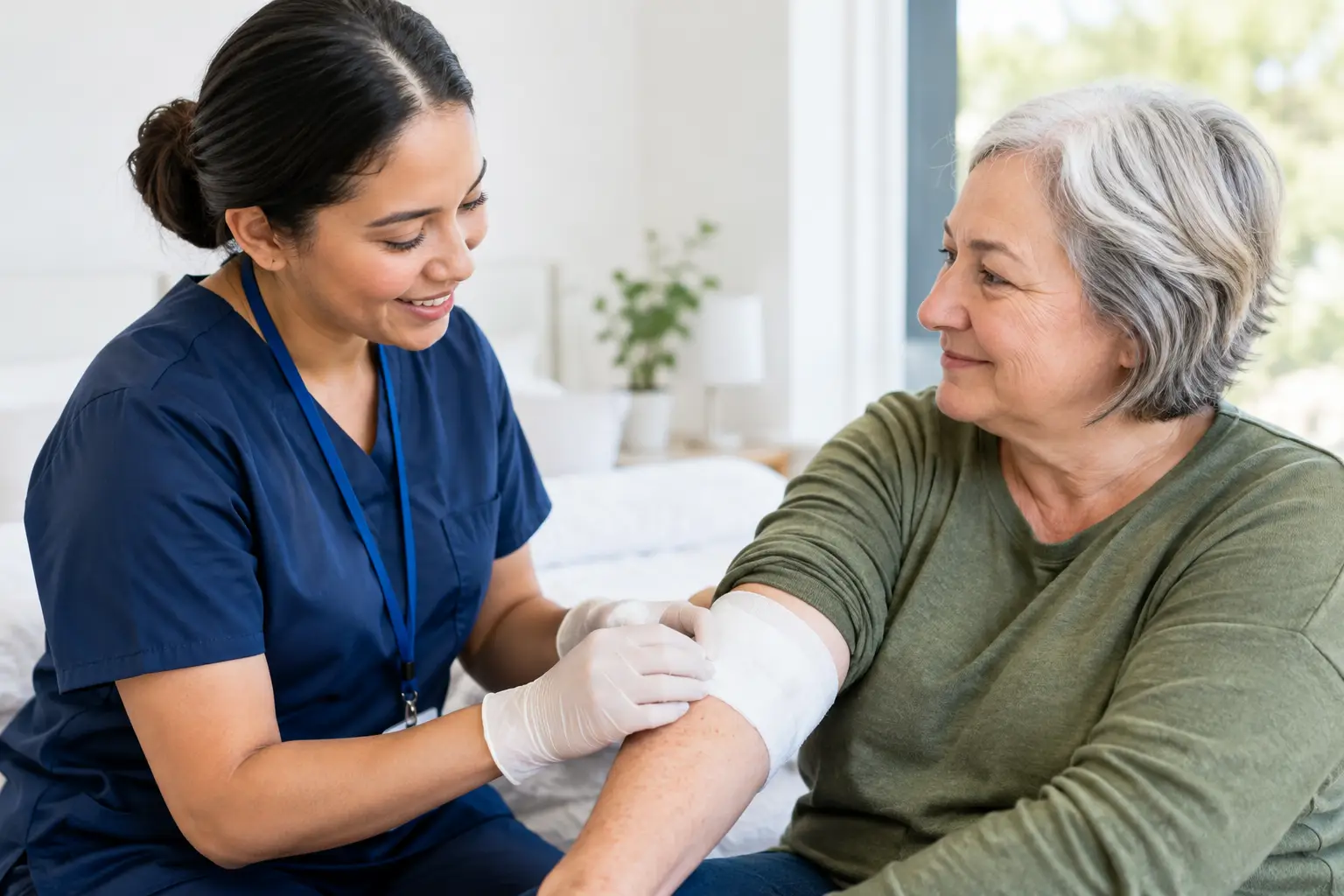
That can include continence assessments, wound care, pressure care, stoma care, catheter-related support, bowel and bladder routines, medication support, diabetes monitoring and skin integrity reviews. It can also include clinical care plans, nursing reports for plan reviews or change of circumstances, and support worker training where high-intensity supports need to be delivered safely.
The distinction matters. A participant may already have support in place, but if the care involves infection risk, skin breakdown, tissue viability concerns, urinary complications, manual techniques that require specific training, or ongoing clinical monitoring, nursing input is usually the safer and more appropriate next step.
When a nursing referral is needed
Some referrals are obvious. Others are delayed because everyone is trying to manage with the supports already in place. In practice, nursing input is often needed when a participant’s routine has become unstable, inconsistent or clinically risky.
A continence issue is a good example. Recurrent leakage, skin damage, frequent urinary tract infections, constipation, bowel accidents or a poorly managed catheter routine are not just inconvenient. They can affect dignity, sleep, social participation, skin integrity and the sustainability of support arrangements. A practical nursing assessment helps identify what is happening, what needs to change and what evidence may be needed for ongoing supports.
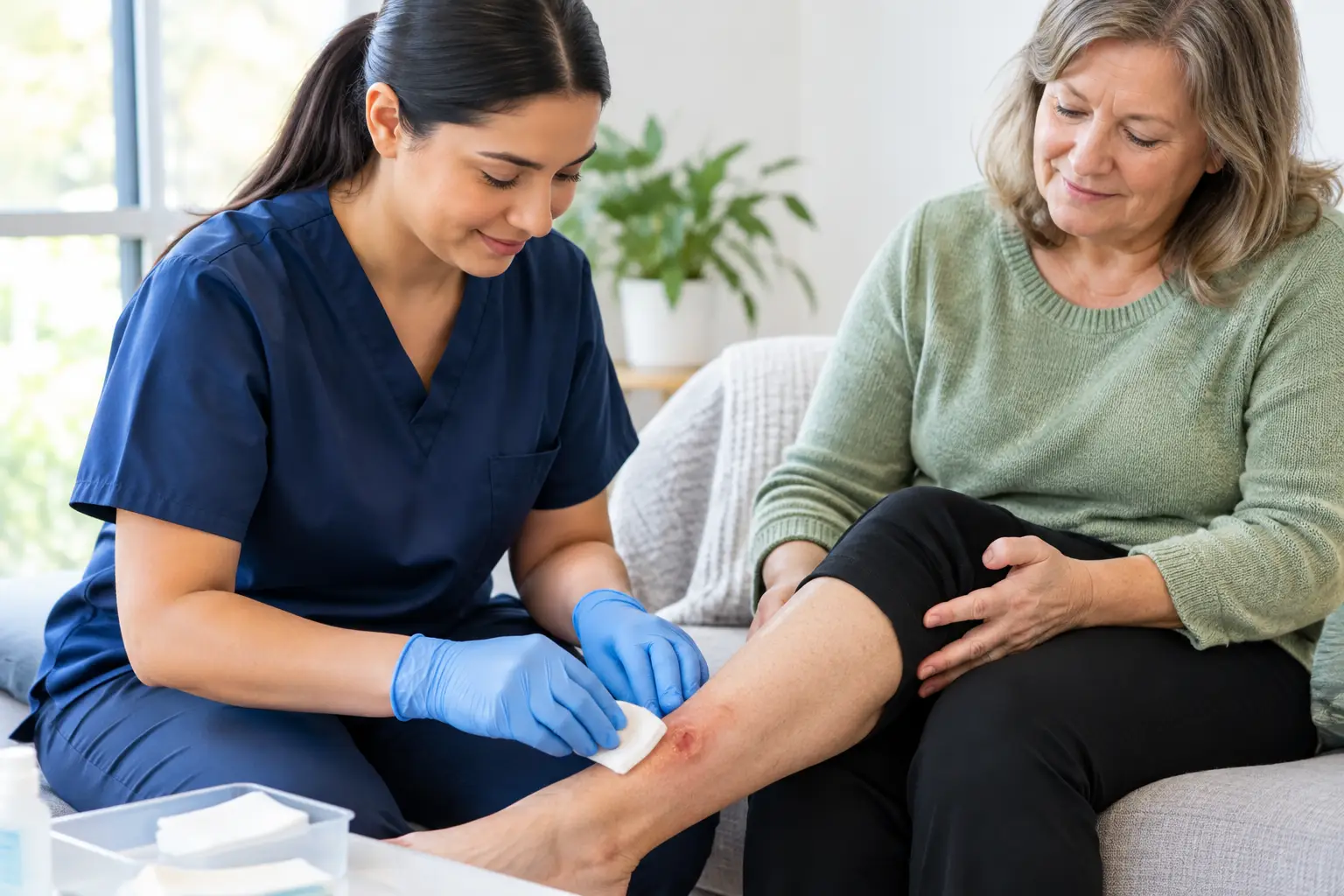
The same applies to wound care and pressure injury prevention. If a participant has reduced mobility, fragile skin, redness over pressure areas, a history of wounds, poor healing or dressing routines that are not being followed consistently, waiting can make things worse. Early clinical review often prevents a much bigger issue later.
For Support Coordinators, a useful rule is simple: if the care need involves clinical judgement, changing risk, or support workers needing education and oversight, refer early. It is easier to build a safe plan at the start than to repair one after a hospital admission, infection or funding dispute.
Why nurse-led NDIS care makes a difference
Good specialist community nursing is not just a nurse visiting the home. It is a structured clinical process. That means assessing the participant properly, understanding their environment, reviewing current routines, identifying gaps, documenting risks clearly and creating recommendations that can actually be carried out.
This is where nurse-led NDIS care gives everyone more confidence. Families need reassurance that the care is safe and dignity-focused. Support Coordinators need clear reports for Support Coordinators that explain the issue, the current risk, the nursing recommendations and the evidence for ongoing supports. Support workers need practical guidance they can follow. Allied health teams need to know the participant’s clinical risks are being managed properly in the background.
It also helps avoid a common problem in complex care – fragmented decision-making. Without a nurse leading the clinical side, bowel care may be handled separately from skin concerns, or continence issues may be treated as an equipment problem when the real issue is routine, infection risk or poor fit between the support model and the participant’s needs. A nurse sees the whole picture.
The role of assessments, reports and clinical evidence
In NDIS settings, good care and good documentation go together. If a participant’s support needs are changing, or current funding is no longer enough to manage clinical risks safely, the nursing evidence has to be clear.
That is why practical nursing assessments matter. A useful assessment does more than describe the problem. It explains what is happening clinically, how it affects the participant’s daily function and safety, what supports are required, and why informal or untrained support is not appropriate for that task.
This is especially important for plan reviews and change of circumstances requests. Vague wording does not help. Strong nursing reports describe the current presentation, the consequences of inadequate care, the interventions needed, the frequency of care, and where support worker training or ongoing nursing oversight is required. For a Support Coordinator managing multiple urgent cases, that level of clarity can save time and reduce back-and-forth.
It also supports continuity. If a participant moves between home, hospital, respite or a different support team, clear documentation reduces the risk of missed steps, inconsistent routines and preventable deterioration.
Support worker training and clinical oversight
Many participants with complex health support needs rely on support workers for parts of their daily routine. That can work well, but only when the worker has the right training, the task is appropriate to delegate, and there is proper clinical oversight behind it.
This is one of the most overlooked parts of specialist community nursing NDIS supports. Training is not a one-off demonstration in the hallway. Safe delegation requires the participant’s care plan to be current, the procedure to be explained properly, red flags to be understood, and documentation expectations to be clear. The nurse also needs to assess whether the environment, equipment and worker competency are suitable.
For tasks such as bowel care routines, catheter-related support, stoma care, skin checks, diabetes-related monitoring or pressure area management, that oversight protects the participant and the support team. It also gives providers and coordinators confidence that high-intensity supports are being delivered in a way that is clinically defensible.
There is always a balance here. Not every task should be handed over, and not every participant needs frequent nursing attendance forever. Sometimes the right model is a period of assessment, stabilisation and training, followed by scheduled review. Other times the clinical risk remains high enough that ongoing nursing involvement is clearly needed. It depends on the participant’s condition, the support environment and how stable the routine is.
What helps a referral move quickly
The fastest referrals usually come with useful clinical context. That does not mean pages of paperwork, but it does help to know the participant’s diagnosis, current concerns, existing support arrangements, relevant discharge information, recent hospital issues, known risks and what outcome is needed.
For example, is the referral for a continence assessment because the current products are failing, or because there are repeated skin issues and infections? Is wound care needed for an existing ulcer, or is the concern that early pressure damage is being missed? Does the participant need support worker training, a clinical care plan, or a nursing report for review evidence? The clearer the purpose, the easier it is to prioritise and respond appropriately.
In Adelaide, this kind of coordinated nursing input is particularly valuable when participants are trying to remain stable at home across large support teams or after discharge from hospital. Services such as Compassion Wings focus on practical nursing assessments, clear documentation and ongoing clinical oversight so referrers are not left guessing what happens next.
Why this matters beyond the clinical task
The real impact of specialist community nursing is not just that a dressing gets changed or a catheter routine is reviewed. It is that the participant is safer at home, care becomes more consistent, support workers know what to do, families are less exposed to crisis management, and referrers have evidence that stands up when needs change.
That is especially important for participants whose dignity has already been affected by failed routines, recurrent infections, unmanaged continence issues or repeated hospital visits. Clinical support in the home should not feel rushed, vague or reactive. It should feel calm, competent and responsive to what the participant actually needs.
If a participant’s care is becoming harder to manage, that usually means the support model needs to change. A timely nursing referral can turn uncertainty into a clear plan, with safe, dignity-focused care at the centre and the right clinical evidence behind every next step.
The best time to involve a nurse is often earlier than people think.



2 Comments
NDIS Pressure Injury Care at Home in 2026 - Compassion Wings
June 12, 2026[…] nurse-led assessment also brings something families and Support Coordinators often need urgently – clarity. Is the […]
How to Support Bowel Care Routines Safely - Compassion Wings
August 9, 2026[…] health changes and incident trends may all indicate a need for refresher education or reassessment. Nurse-led NDIS care provides a practical way to review whether the plan is still safe in real home conditions, rather […]