

High Intensity Daily Activities Nurse Guide
A participant has had two recent hospital presentations for blocked catheter issues, their skin is breaking down, and support workers are doing their best with mixed instructions. That is usually the point where a high intensity daily activities nurse becomes essential – not as an extra layer of service, but as the clinical lead who can assess risk, set safe routines and give everyone clear direction.
For Support Coordinators, families and providers, the challenge is rarely motivation. It is clinical complexity. When bowel care, catheter support, wound management, medication oversight or diabetes support sits inside daily routines, small gaps in training or documentation can quickly become safety issues. Nurse-led NDIS care helps turn those risky day-to-day tasks into structured, documented and clinically supervised supports that are safer for the participant and easier for teams to follow.
What a high intensity daily activities nurse actually does
In NDIS settings, high intensity daily activities are not just “harder” personal tasks. They are daily supports with clinical risk attached. That may include continence care, complex bowel and bladder routines, enteral support, subcutaneous injections, dysphagia-related mealtime risks, catheter care, stoma support, pressure area management or medication-related oversight. The common thread is that these activities need assessment, written instructions, worker training and monitoring.
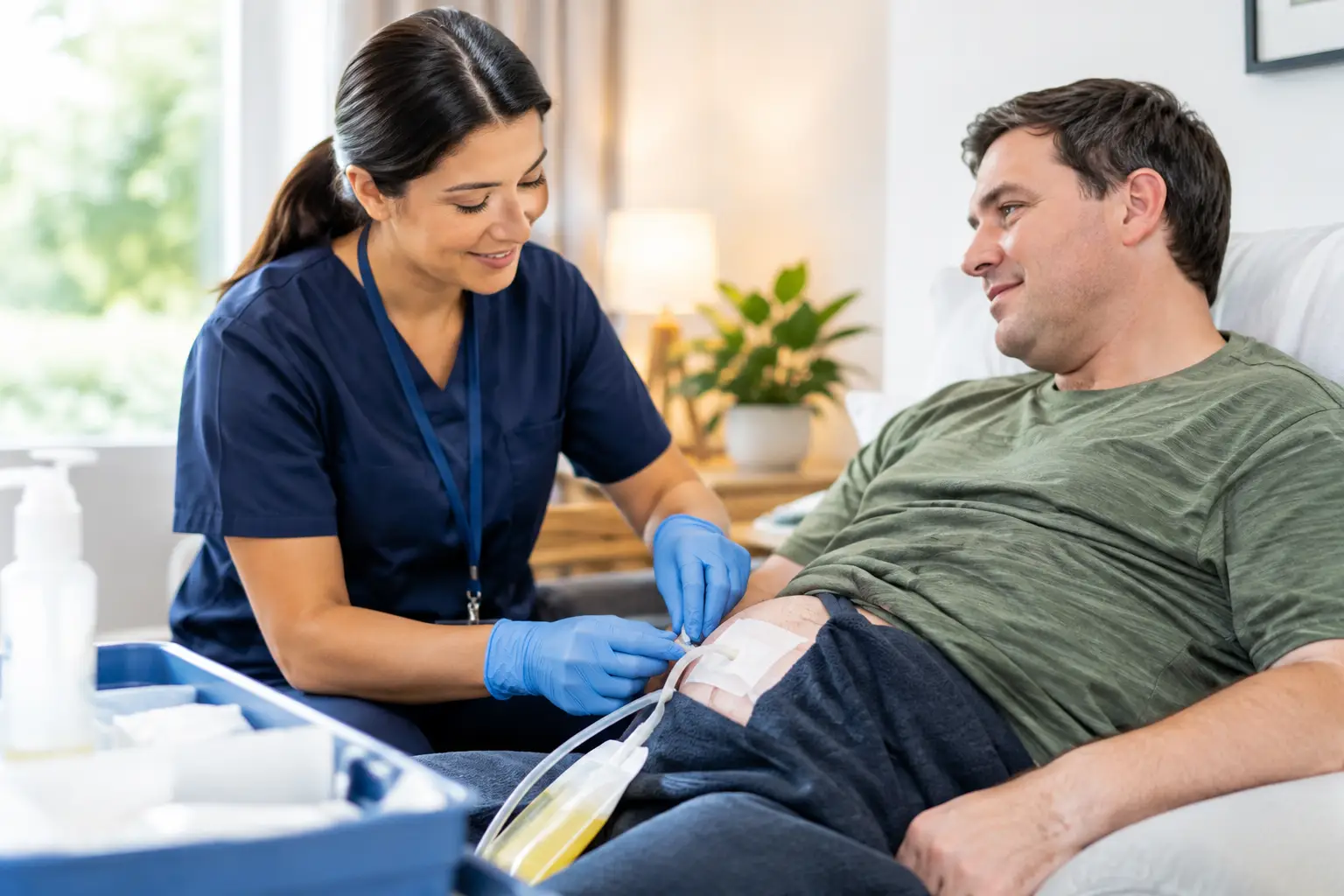
A high intensity daily activities nurse brings clinical judgment to those routines. That starts with practical nursing assessments in the home, looking at what is happening now, where the risks are, and whether current supports are realistic. Good nursing input is not vague. It should identify the task, the skill needed, the risks if it is done incorrectly, signs of deterioration, escalation steps and the level of supervision required.
This is especially important when several people are involved in care. Families may have one way of doing things, hospital discharge paperwork may say another, and support workers may have learned by observation rather than formal instruction. A nurse-led approach aligns the team around one safe plan.
Why clinical oversight matters in daily care
Many daily supports look manageable until something changes. A participant who has been stable for months may suddenly develop recurrent urinary tract infections, a wound that is not healing, constipation linked to a new medication, or redness that becomes a pressure injury. Without clinical support in the home, these changes can be missed or responded to too late.
The value of nursing oversight is not simply task completion. It is early identification of risk, practical changes to routine and clear escalation. That might mean reviewing fluid intake patterns in someone with recurrent catheter blockages, changing dressing frequency based on wound exudate, checking whether continence products are appropriate, or updating a skin integrity plan after weight loss or reduced mobility.
There is also a documentation benefit. Support Coordinators often need clear reports for Support Coordinators, Plan Managers or review teams that explain why nursing input is required and what supports need to be sustained. Vague notes do not help much. Clinical reports that connect functional impact, health risk, current supports and recommendations are far more useful when plans are under pressure or a change of circumstances needs to be documented properly.
When to refer for a high intensity daily activities nurse
Some referrals are obvious, such as a participant returning home with a new stoma or requiring regular catheter-related support. Others are easier to miss because the issue has been absorbed into the daily routine over time.
A referral is worth considering when workers are unsure about continence routines, bowel care is inconsistent, wounds are slow to heal, skin integrity is declining, medication support has become more complex, or there are repeated preventable hospital visits. It is also appropriate when support workers are expected to assist with high-risk tasks but have not had structured training and competency oversight.
Families often notice the warning signs first. They may describe constant troubleshooting, confusion between providers, fear about infections, or anxiety about what happens when the regular worker is away. Those concerns matter. They usually point to a need for better clinical systems, not just more hours of support.
For discharge teams and allied health professionals, the best referrals come before the situation becomes urgent. A participant with complex health support needs may appear settled in hospital or clinic settings, but home routines are where the pressure points show up. Early nursing involvement can reduce avoidable complications and help participants stay safe at home.
The clinical supports that most often need nurse-led input
Continence care is one of the most common examples. A participant may have incontinence, retention, recurrent infections or product issues that affect skin health, sleep and community access. A nurse can assess the pattern, identify risks and recommend a practical routine that balances dignity, skin protection and feasibility for the people providing support.
Wound care and pressure care also need close attention. It is not enough to apply a dressing and hope for progress. Wounds need assessment, monitoring and a plan that reflects pressure, moisture, nutrition, mobility and infection risk. The same applies to pressure injury prevention. If someone is spending longer in bed or seated, daily routines may need to change quickly to protect skin integrity.
Stoma care and catheter support are another area where participants and workers benefit from clear, written clinical guidance. These supports can be done safely in the home, but only when the routine is well understood and signs of trouble are documented. Leakage, blockages, changes in output, pain, odour, skin breakdown or reduced confidence with care are all signs that nursing review is needed.
Bowel and bladder routines, diabetes support and medication oversight also sit in that category where “daily” does not mean low risk. The details matter. Timing, monitoring, hydration, observation and escalation can change outcomes significantly.
Training support workers is part of safe care
One of the biggest gaps in complex home care is the assumption that support workers will simply pick things up as they go. That approach creates inconsistency and exposes participants to unnecessary risk.
Support worker training and clinical oversight should be practical, specific and matched to the participant. Generic information is rarely enough. Workers need to understand not only what to do, but what to look for, what not to do and when to escalate. They also need confidence. A worker who is unsure about a catheter bag setup, a wound dressing change or a bowel routine may either hesitate when action is needed or continue despite signs that something is wrong.
This is where nurse-led NDIS care makes a real difference. Structured education, written care plans and documented follow-up create safer handover between shifts and more consistent care across teams. It also gives Support Coordinators confidence that the service is not relying on verbal instructions or informal teaching alone.
What good nursing evidence looks like for NDIS planning
When complex care needs are not documented well, the participant often carries the consequences. Supports may look optional on paper even when they are clinically necessary in practice. Strong nursing evidence helps explain why a task is high risk, what level of support is required, and what may happen if appropriate care is not in place.
That evidence should be practical. It needs to describe current health issues, daily care requirements, risks, recent changes, support worker skill needs and recommended clinical oversight. It should also reflect what is happening in the home rather than relying only on historic diagnoses.
For plan reviews or change of circumstances, clear nursing reports can be particularly valuable where there has been deterioration, repeated infections, new equipment or supply needs linked to clinical care, or increasing complexity that affects routine support delivery. Good evidence does not guarantee an outcome, but poor evidence almost always weakens the case.
What information helps before onboarding
The most useful referrals include the participant’s diagnosis or relevant clinical conditions, current concerns, existing care plans, discharge summaries if recent, wound or continence history where relevant, current providers involved and any immediate risks. It also helps to know who is coordinating the care and whether support workers are already in place.
If the situation is changing quickly, say so. A participant with a new stoma, repeated catheter blockages, skin breakdown or unstable diabetes support needs may need early review. Delays can turn manageable issues into urgent ones.
In Adelaide, particularly across busy home care settings where multiple providers are involved, fast and clinically organised onboarding matters. A nurse-led service such as Compassion Wings can assess, document, train and provide ongoing oversight in a way that supports both participant safety and team clarity.
Safe, dignity-focused care is the real goal
High intensity supports are often discussed in terms of risk, and rightly so. But risk is only one part of the picture. The other part is dignity. Participants should not have to choose between staying at home and receiving clinically safe care. They should be able to have routines that are respectful, consistent and manageable for the people around them.
That usually happens when the clinical side of care is taken seriously from the start. A high intensity daily activities nurse helps translate complex health needs into practical routines, clear documentation and realistic support worker guidance. When that is done well, families feel less alone, Support Coordinators have clearer evidence, and participants are more likely to remain stable where they want to be – at home, with care that is safe, informed and properly led.




1 Comment
NDIS continence assessments: who can do them in 2026? - Compassion Wings
June 6, 2026[…] moisture lesions, constipation with escalation concerns, or support workers needing training in high-intensity tasks, nurse-led NDIS care is usually the safer […]