
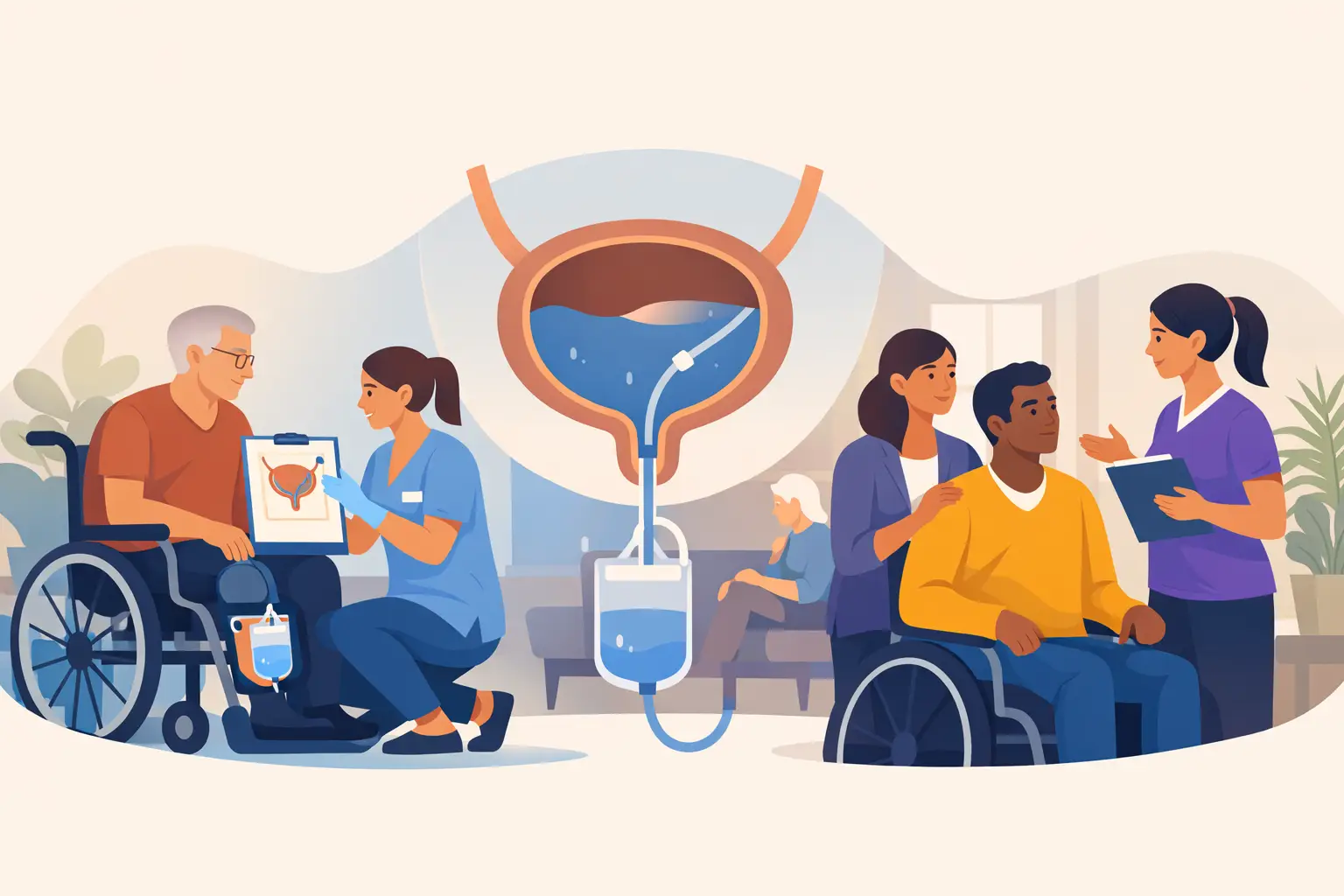
Bladder Management Support NDIS: When to Refer
Bladder issues rarely stay contained to the bladder. A participant who is leaking, retaining urine, getting repeated UTIs, or relying on inconsistent catheter care is often also dealing with disrupted sleep, skin breakdown, pain, embarrassment, carer stress and avoidable hospital presentations. That is why bladder management support NDIS should never be treated as a minor care task when the person’s needs are complex.
For Support Coordinators, families and SIL teams, the challenge is usually not spotting that something is wrong. It is knowing when routine support is no longer enough and when nurse-led NDIS care is needed to assess risk, document needs properly and put a safe plan in place. In practice, early clinical input often prevents the slow build-up of problems that later become urgent.
What bladder management support NDIS should actually cover
Bladder management support under the NDIS can involve far more than continence products or reminders to use the toilet. For participants with complex health needs, it may include continence assessment, catheter-related support, bladder routine planning, skin integrity monitoring, hydration considerations, infection risk review, support worker training and practical nursing assessments in the home.
The exact mix depends on the participant’s presentation. Someone with neurogenic bladder and an indwelling catheter has very different risks from someone experiencing functional incontinence after hospital discharge. Another participant may be continent some days and not others because of mobility, medication effects, cognition or underlying health changes. The clinical picture matters.
A strong nursing approach looks at what is happening, why it is happening, what risks are present, and what support can be safely delivered by workers, family or the participant themselves. It also documents what must be escalated to a nurse or medical team. That distinction is critical for safe, dignity-focused care.
When bladder care needs a nurse-led assessment
Not every bladder concern requires specialist nursing involvement, but there are clear situations where a referral makes sense. Recurrent UTIs, new incontinence, urinary retention, catheter blockages, blood in urine, leaking around a catheter, skin damage, strong odour, pain, increased overnight accidents or sudden changes after illness all warrant closer review.
The same applies when support workers are unsure about the routine, when current notes are vague, or when a family member is carrying too much of the clinical responsibility. If staff are asking different people for different instructions, the participant already has a safety gap.
This is where practical nursing assessments are valuable. A nurse can review the participant’s history, current routine, equipment being used, fluid intake patterns, skin condition, signs of infection, bowel factors and the capability of the support environment. Bladder care is rarely a standalone issue. Constipation, mobility limitations, cognitive changes, medication side effects and poor pressure care can all make bladder problems worse.
Why documentation matters as much as hands-on care
A common problem in complex health support is that everyone knows the participant is struggling, but there is not enough clinical evidence written down in a way that supports action. For Support Coordinators and Plan Managers, that creates pressure. They may be trying to justify nursing supports, increased staffing or a change of circumstances without the right documentation to show what the risk actually is.
Clear reports for Support Coordinators can make the difference between a vague concern and a clinically supported recommendation. Good nursing documentation should explain the participant’s bladder-related needs, current risks, what care is required, who can do what safely, where training is needed, and what outcomes are expected if supports are funded or adjusted.
This is not about overstating need. It is about accuracy. Sometimes the report confirms that a participant needs ongoing nursing oversight. Sometimes it shows that a support worker can safely follow a structured care plan after training. Sometimes it identifies medical review as the next priority. The point is that decisions are then based on evidence, not assumptions.
Catheter care is one of the clearest referral points
In NDIS settings, catheter-related support often sits right on the line between daily routine and high-risk clinical care. If the participant has an indwelling catheter or suprapubic catheter, there are real risks around infection, blockages, dislodgement, bypassing, skin issues and poor escalation.
What looks simple on paper can become unsafe quickly if workers are not trained or if the routine was copied from hospital discharge paperwork and never reviewed in the home environment. A participant may be technically discharged as stable, yet still have a setup that is impractical for overnight drainage, difficult for workers to monitor, or inconsistent with the participant’s mobility and privacy needs.
Nurse-led NDIS care helps translate that clinical requirement into a workable home routine. That may include checking how drainage bags are handled, how often output is observed, whether there are signs of infection, whether the participant has pain, and whether workers know exactly what to document and escalate. Support worker training and clinical oversight matter here because catheter care done inconsistently is often what leads to preventable deterioration.
Dignity and risk go together
Bladder care is intimate. Participants may minimise issues because they are embarrassed, tired of talking about it, or worried that more clinical involvement means less independence. Families may quietly adapt for months before asking for help. Support workers may feel uncomfortable raising concerns if they think the issue is simply part of the participant’s usual routine.
A good nursing response protects dignity by making the care more predictable, not more intrusive. Clear bladder routines, proper product use, timely toileting support, respectful catheter management and private, consistent documentation all reduce distress. So does addressing the practical details that people often avoid discussing, such as odour management, linen changes, skin protection and overnight planning.
Safe care and dignity are not competing goals. In bladder management, they usually improve together.
Bladder support often links with bowel, skin and pressure care
One of the biggest mistakes in bladder management support NDIS is treating urine issues in isolation. In reality, bladder concerns often sit alongside constipation, moisture lesions, pressure injury risk, reduced mobility, diabetes, medication changes or poor hydration habits. If a participant is spending longer in bed because of fatigue or illness, or if they are avoiding fluids to reduce accidents, the problem can spread quickly beyond continence.
That is why clinical support in the home is so useful. A nurse sees what the routine actually looks like day to day. Are continence products being changed often enough? Is there redness that workers have normalised? Is the participant avoiding transfers because the bathroom setup is stressful? Is bowel dysfunction worsening bladder symptoms? These are practical questions with real consequences.
For participants with multiple clinical issues, a combined care plan covering bowel and bladder routines, skin integrity monitoring, pressure care and escalation steps is often safer than scattered notes from different providers.
What Support Coordinators should gather before referral
A referral moves faster when the basics are clear. The most useful starting information usually includes the participant’s diagnosis or relevant history, current bladder concerns, whether a catheter is in place, recent hospital admissions, known UTIs or infections, current support roster, who is delivering care now, and any incident trends such as repeated leakage, skin issues or overnight concerns.
It also helps to know what outcome is needed. The referral may be for an NDIS continence assessment, a nursing report for plan review, support worker training, a clinical care plan, or urgent review after a change in status. If the participant has multiple teams involved, clarity about who is managing what avoids duplication and missed steps.
For Adelaide-based referrers, especially those coordinating complex home supports across SIL or community settings, a responsive nurse-led provider can reduce delays when the issue is already affecting safety.
What good outcomes look like
The best outcome is not simply fewer accidents, though that matters. It is a routine that is safe, realistic and understood by everyone involved. The participant knows what to expect. Workers know what to do. Families are not carrying hidden clinical tasks without backup. Support Coordinators have documentation they can rely on. Risks are identified early instead of after another emergency department visit.
Sometimes improvement is obvious, such as fewer infections or better skin condition. Sometimes the win is quieter – fewer after-hours phone calls, less confusion between staff, more confidence around catheter care, or clearer evidence for a plan review. In complex health support, those changes are significant.
When bladder care becomes inconsistent, risky or hard to explain, it is usually time for nursing input. Compassion Wings provides nurse-led NDIS care, practical nursing assessments, clear reports for Support Coordinators and support worker training so participants with complex bladder needs can stay safer at home with care that is clinically sound and dignity-focused.
The earlier a bladder issue is assessed properly, the easier it is to prevent it from becoming a bigger problem.