

Who Can Deliver Pressure Care Training in Australia?
A pressure area can deteriorate faster than many teams expect. What starts as a red mark after a transfer, a long sit in a wheelchair, or time in bed can become a painful wound, an infection risk, and a hospital presentation if the right clinical response is not in place. That is why people often ask who can deliver pressure care training in Australia, especially when a participant has reduced mobility, fragile skin, continence issues, poor nutrition, or a history of pressure injury.
The short answer is that pressure care training should be delivered by a suitably qualified health professional with the knowledge and clinical experience to assess risk, teach prevention strategies safely, and recognise when a participant needs escalation. In many NDIS settings, that usually means a registered nurse, and in more complex cases, a nurse with wound care, continence, community nursing, or high-intensity support experience is often the most appropriate person.
Who can deliver pressure care training in Australia?
There is no single rule that says only one profession can provide all pressure care education in every setting. The right trainer depends on the participant’s risks, the purpose of the training, and whether staff are being taught general principles or participant-specific clinical care.
For low-risk education, an organisation may use an internal educator or clinician to cover basic skin integrity awareness, repositioning principles, equipment use, and early warning signs. But once the training moves into participant-specific care, manual handling risks, wound prevention linked to continence, or supervision of support workers delivering daily care, a registered nurse is usually the safer and more defensible choice.
That matters in the NDIS because support worker training is not just about sharing information. It needs to translate into safe, dignity-focused care in the home, with practical nursing assessments, clear documentation, and realistic instructions that workers can actually follow across shifts.
Why nurse-led pressure care training is often the right fit
Pressure care is rarely just about turning someone every few hours. Real-world risk is more layered than that. A participant may also have moisture-related skin damage, catheter or stoma issues, poor circulation, diabetes, limited sensation, cognitive impairment, weight loss, swallowing concerns affecting nutrition, or seating problems that increase pressure through the day.
A nurse-led approach helps bring those risks together. Instead of teaching pressure care as an isolated task, the nurse can assess the whole clinical picture and link it to the participant’s routine, support needs, and home environment. That is particularly important for people receiving complex health support under the NDIS, where support workers may need training and clinical oversight to carry out daily care safely.
An experienced nurse can also tell the difference between general education and a situation that requires a formal care plan, wound review, GP input, or referral to another clinician. That clinical judgement is where many avoidable complications are prevented.
What suitable pressure care training should include
Good pressure care training is practical. It should not leave support workers with vague advice such as check the skin more often or move the person regularly. Training needs to explain what to look for, what action to take, what not to do, and when to escalate concerns.
At a minimum, training should cover pressure injury risk factors, skin inspection, repositioning schedules where clinically appropriate, seating and bed-based pressure relief, continence-related skin protection, nutrition and hydration considerations, use of prescribed equipment, manual handling considerations, and documentation expectations. It should also address red flags such as non-blanching redness, skin breakdown, pain, heat, swelling, odour, drainage, or any sudden change in a participant’s skin condition.
Where the participant already has a wound or a history of pressure injury, the training should be tailored. Generic education is not enough when workers need to understand exactly how that participant is positioned, which areas are most at risk, what products are used, and when nursing review is required.
When Support Coordinators should refer for nurse-led training
Support Coordinators are often the first to notice when pressure care risk is outgrowing routine support. The signs are usually practical rather than dramatic. A participant may be spending more time in bed, refusing transfers because of pain, having recurrent redness over bony areas, experiencing moisture damage from continence issues, or cycling through short hospital admissions for preventable skin breakdown.
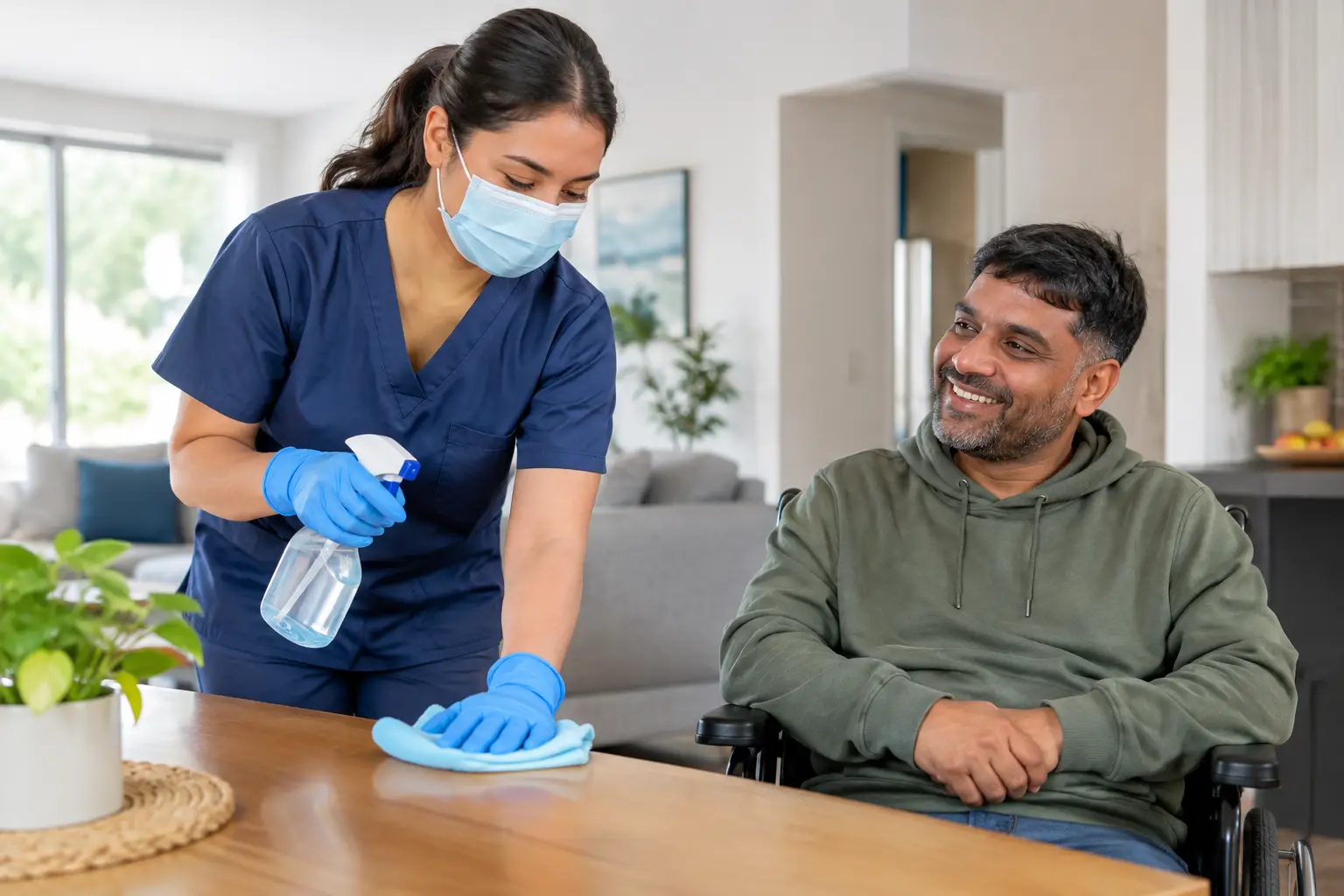
That is the point where a nurse-led NDIS care approach becomes valuable. A nurse can provide clinical support in the home, complete a risk-based assessment, develop or update care instructions, train support workers, and provide clear reports for Support Coordinators if further evidence is needed for plan review or change of circumstances.
Referral is also sensible when there are multiple providers involved and no one is clearly overseeing skin integrity. In those cases, support workers may each be doing their best, but without consistent training and clinical oversight, small issues are easy to miss.
It depends on whether the training is generic or participant-specific
This distinction matters. Generic pressure care training can teach broad principles that apply across many settings. That can be useful for induction or workforce development. But participant-specific training is different. It is linked to one person’s actual risks, equipment, medical history, mobility, continence status, and support environment.
Participant-specific training should be based on a current assessment. Otherwise, workers may receive advice that sounds sensible but does not fit the person in front of them. For example, standard repositioning guidance may not suit a participant with pain, contractures, respiratory issues, or limited tolerance for certain positions.
For NDIS participants with complex needs, participant-specific training is usually where nurse involvement becomes most important. It supports safe implementation of care plans and gives referrers confidence that the advice is clinically grounded, not just copied from a general manual.
What qualifications and experience should you look for?
If you are deciding who can deliver pressure care training in Australia for a participant with elevated risk, look beyond the course title alone. The key questions are whether the trainer has current registration where relevant, experience in wound prevention and skin integrity, understanding of community-based care, and the ability to train support workers in a way that is practical and audit-safe.
A strong trainer should be able to assess, document, teach, and escalate. They should understand how pressure care interacts with continence, mobility, nutrition, equipment, and infection risk. In NDIS settings, it also helps if they can prepare clear clinical records that support communication with families, providers, and Support Coordinators.
This is one reason many teams prefer nurse-led services rather than standalone education. Training on its own can tick a box. Training backed by assessment and ongoing clinical oversight is more likely to keep the participant safe at home.
What good documentation looks like after training
Pressure care training should leave a paper trail that is useful, not just signed. There should be evidence of what was assessed, who attended, what risks were identified, what instructions were given, and what escalation pathways apply. If a participant has specific positioning needs, skin inspection requirements, or product use instructions, those should be written clearly enough for different workers to follow consistently.
This is especially important when families are worried, support workers are changing, or a plan review is coming up. Clear nursing records help show that clinical risks have been identified and managed properly. They also help reduce confusion between providers.
For many referral teams, that level of documentation is just as important as the training itself. It supports continuity, accountability, and safer day-to-day care.
Pressure care training in the home needs to be realistic
Home-based care is not a hospital ward. Space is tighter, routines are variable, and not every recommendation is practical in every household. That is why pressure care training works best when it is delivered in the participant’s actual environment, or at least designed with that environment in mind.
A nurse assessing someone at home can spot issues that generic education may miss – a mattress that is no longer suitable, a recliner chair causing prolonged pressure, transfer methods that increase shearing, a continence routine affecting skin moisture, or a gap between the written care plan and what happens across morning and evening shifts.
For Adelaide-based participants with complex needs, a nurse-led provider such as Compassion Wings can combine practical nursing assessments, support worker training and clinical oversight, and clear reports for Support Coordinators. That joined-up model is often what prevents a skin concern from becoming a much bigger problem.
The best person to deliver pressure care training is not simply the person available first. It is the clinician who can match training to risk, teach clearly, document properly, and step in when the situation needs more than education alone. When skin integrity is fragile, safe care starts with the right clinical eyes on the problem.




1 Comment
NDIS Review Report Example for Complex Continence Needs - Compassion Wings
August 5, 2026[…] Support worker training and clinical oversight are recommended to ensure the plan is implemented safely and consistently across the staff team. Training should be specific to the participant rather than a generic continence session. It should cover catheter bag positioning and emptying, maintaining closed drainage systems where applicable, hand hygiene, privacy, bowel documentation, recognising leakage patterns, skin protection, and when to contact a nurse. […]