

Unplanned Hospital Prevention Case Study
A leaking catheter, a small area of redness, or a bowel routine that suddenly stops working can become an emergency quickly when no one is clear on what to do next. This unplanned hospital prevention case study shows how timely nursing assessment, practical documentation and support worker education can reduce risk for an NDIS participant with complex health needs.
The example is a de-identified composite based on common clinical referral patterns. It is not a promise that every hospital presentation can be prevented. Some deterioration needs urgent medical assessment. The purpose of nurse-led NDIS care is to recognise risks early, establish safe routines and make escalation decisions clearer for everyone involved.
The clinical picture: risks were building at home
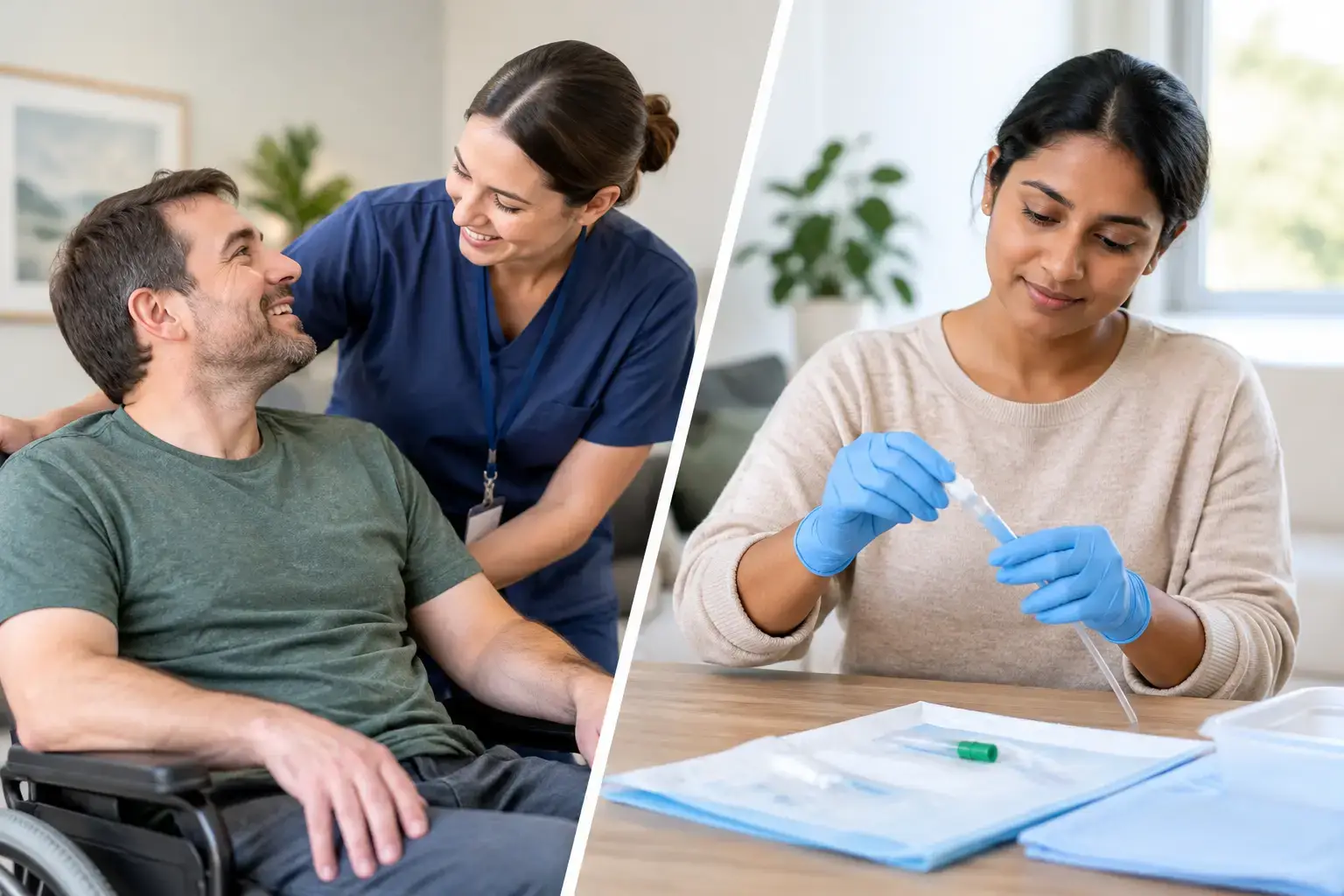
“David”, an adult NDIS participant living with neurological disability, had an indwelling catheter, a history of recurrent urinary tract infections, reduced mobility and fragile skin. His family and Support Coordinator were increasingly concerned by several unplanned emergency department presentations over the previous year.
The issue was not a lack of caring people around him. It was that the clinical information was fragmented. Catheter care instructions were inconsistent, staff were unsure which changes were urgent, and there was no shared record of urine output, fluid intake, bowel activity, skin observations or catheter concerns. When David appeared unwell, workers understandably erred on the side of calling an ambulance because they did not have a clinical pathway to follow.
This is a common pressure point for families, support teams and coordinators. A hospital presentation may be appropriate, but repeated presentations can also signal that the day-to-day clinical plan is not specific enough, staff have not been trained for the participant’s needs, or early warning signs are being missed.
Unplanned hospital prevention case study: the nursing response
The referral requested clinical support in the home, a catheter and skin integrity review, and clear reports for Support Coordinators. The first step was not to create a generic plan. It was to understand David’s actual routine, his baseline health, the equipment being used, prior hospital discharge information, GP and specialist directions, and the knowledge of the people providing daily support.
Practical nursing assessment before changing routines
A nurse-led assessment identified several risks that needed attention. The drainage bag was sometimes positioned in a way that could impair drainage. Recording practices varied between workers. Early symptoms reported by David, including discomfort and feeling “off”, were not consistently documented or communicated. There was also pressure risk around the sacral area due to long periods sitting and uncertainty about daily skin checks.
The assessment did not replace medical review. Where infection or catheter blockage was suspected, the care plan made clear when staff were to contact the GP, seek urgent advice or call emergency services. That distinction matters. Clinical support should never encourage a team to manage red flags at home when escalation is needed.
The nurse also considered what was realistic. A highly detailed chart may look thorough but fail if workers cannot complete it during a busy shift. The resulting routine used short, relevant prompts and clear language, with observations linked directly to actions.
A care plan that staff could actually use
The clinical care plan set out David’s usual presentation and individualised routines for catheter support, hydration prompts, bowel monitoring, positioning and skin checks. It described what workers should observe, what to record, who to notify and what required urgent escalation.
For example, a concern such as reduced output was not left as a vague instruction to “monitor”. The plan outlined the immediate checks within a worker’s role, documentation requirements and the pathway for contacting the nominated clinician or medical practitioner. It also included emergency signs that required prompt emergency response.
This level of clarity protects dignity as well as safety. Continence and catheter-related issues are deeply personal. Safe, dignity-focused care means using respectful language, preserving privacy and avoiding unnecessary interventions, while still acting decisively when the participant’s health changes.
Support worker training and clinical oversight
A plan on a shelf does not prevent harm. The support team received practical training aligned to David’s specific needs and the approved care plan. Training covered infection prevention principles, catheter bag positioning, recognising changes from David’s baseline, skin observation, documentation and escalation.
Importantly, training also gave workers permission to speak up. In complex health support, a worker may be the first person to notice that a participant is quieter than usual, has new discomfort, or has a change in output or skin condition. They do not need to diagnose the cause. They do need to know that an observation is clinically relevant and where it should go.
Ongoing nursing oversight allowed the plan to be reviewed when routines changed. This is particularly valuable after a hospital discharge, medication change, new wound, recurrent infection or change in mobility. A static plan can become unsafe if it no longer reflects current clinical needs.
What changed, and what cannot be claimed
Over the following months, David’s team had a more consistent way to monitor concerns and communicate them. Minor problems were identified earlier, documentation was more useful during clinical reviews, and his Support Coordinator had clearer evidence of the risks being managed and the nursing supports required.
The meaningful change was not simply fewer calls or a promise of “no hospital admissions”. Health is rarely that predictable. Rather, decisions became more informed. Staff could distinguish between a routine issue, a concern needing same-day clinical or GP advice, and an emergency. David and his family had greater confidence that people understood his care requirements.
Hospital prevention has limits. A urinary infection, catheter blockage, pressure injury or other complication may still require urgent assessment despite excellent care. It also depends on the participant’s diagnosis, medical history, access to treating clinicians and the timeliness of escalation. The goal is to reduce avoidable risk, not to delay necessary treatment.
Why nursing evidence matters for NDIS planning
For Support Coordinators, an unplanned hospital presentation is often followed by urgent questions: What changed? Is the current support arrangement safe? What clinical evidence is needed for a plan review or change of circumstances?
A nursing report can translate day-to-day concerns into clear clinical information. It may document functional health risks, required routines, frequency of nursing involvement, training needs, the impact of inconsistent care and recommendations for ongoing clinical oversight. This helps create a stronger, more audit-ready picture than anecdotal notes alone.
It is not funding advice and it does not guarantee an NDIS outcome. However, practical nursing assessments and clear reports for Support Coordinators can help decision-makers understand why a participant needs specific clinical supports to remain safe at home.
When a referral to a nurse is appropriate
Consider a nurse-led referral when a participant has repeated emergency presentations, frequent infections, new or worsening skin concerns, catheter or stoma complications, unstable bowel or bladder routines, medication-related concerns, diabetes risks, or a support team that lacks confidence with high-intensity tasks.
Referral is also worthwhile when multiple providers are involved but no one has ownership of the clinical plan. Families should not have to coordinate complex instructions from memory, and support workers should not be expected to interpret medical information without training and oversight.
A useful referral includes the participant’s diagnosis and current risks, relevant hospital discharge summaries or treating-team directions, current care plans, recent incident information, medication or treatment changes, and the key concern prompting review. Even if every document is not available, a nurse can identify what information is needed and prioritise immediate safety issues.
For Adelaide participants with complex health needs, Compassion Wings provides nurse-led NDIS care that brings assessment, documentation, support worker training and clinical oversight together. The practical question is not whether every crisis can be avoided. It is whether the participant’s team has the knowledge, plan and escalation pathway needed to respond well before a small concern becomes a larger one.