

Pressure Care at Home NDIS: What Matters
A red mark on a heel or tailbone can look minor at breakfast and become a serious clinical issue by the end of the week. For NDIS participants with reduced mobility, continence concerns, fragile skin or complex health needs, pressure care at home NDIS is not simply about comfort. It is about preventing avoidable wounds, reducing infection risk and keeping daily care safe, consistent and dignified.
Pressure injuries usually develop when skin and the tissue underneath are exposed to ongoing pressure, friction or shear. This can happen in bed, in a recliner, in a wheelchair or during transfers. Moisture from sweating or incontinence can increase the risk, and so can poor nutrition, reduced sensation, pain, fatigue and long periods spent in one position. Families often notice a change in skin colour first. Support workers may notice a participant is harder to reposition, more uncomfortable during personal routines, or spending longer in bed due to illness or fatigue.
Why pressure care at home NDIS needs clinical oversight
Pressure care is often spoken about as if it is just a matter of turning someone more often. In practice, it is rarely that simple. The right routine depends on the participant’s mobility, diagnosis, seating tolerance, continence status, equipment, cognition, pain levels and who is actually providing care day to day.
That is where nurse-led NDIS care matters. A practical nursing assessment looks at more than the skin. It considers how the participant moves, what surfaces they sit or lie on, whether clothing or bedding is increasing friction, how often supports are in place, and whether current routines are realistic. A plan that looks good on paper but cannot be followed in a real home environment will not protect skin integrity for long.
For Support Coordinators, this is often the difference between a vague concern and a clinically useful next step. Clear reports for Support Coordinators can document the level of risk, current skin issues, contributing factors, care recommendations and where further escalation is needed. That helps with safer service planning and stronger evidence when clinical supports need to be reviewed.
Who is most at risk at home
Some participants are clearly high risk, such as people using wheelchairs full time or those with very limited mobility. But pressure injuries also affect people whose risks are less obvious. Someone who can stand for transfers but spends most of the day in one chair may still be vulnerable. A participant recovering from illness, losing weight, managing diabetes or dealing with bowel and bladder issues can also deteriorate quickly.
Higher risk is common where there is reduced ability to reposition independently, altered sensation, spinal cord injury, neurological conditions, fatigue, contractures, oedema, wound history or moisture-associated skin damage. Risk also rises when support workers change often, care instructions are inconsistent, or equipment is being used without proper review.
In home settings, routine matters. If morning staff reposition one way, afternoon staff do something different and overnight support is unclear, small problems are missed. Good pressure care relies on practical, repeatable routines and clinical oversight when the picture changes.
What good pressure care looks like in the home
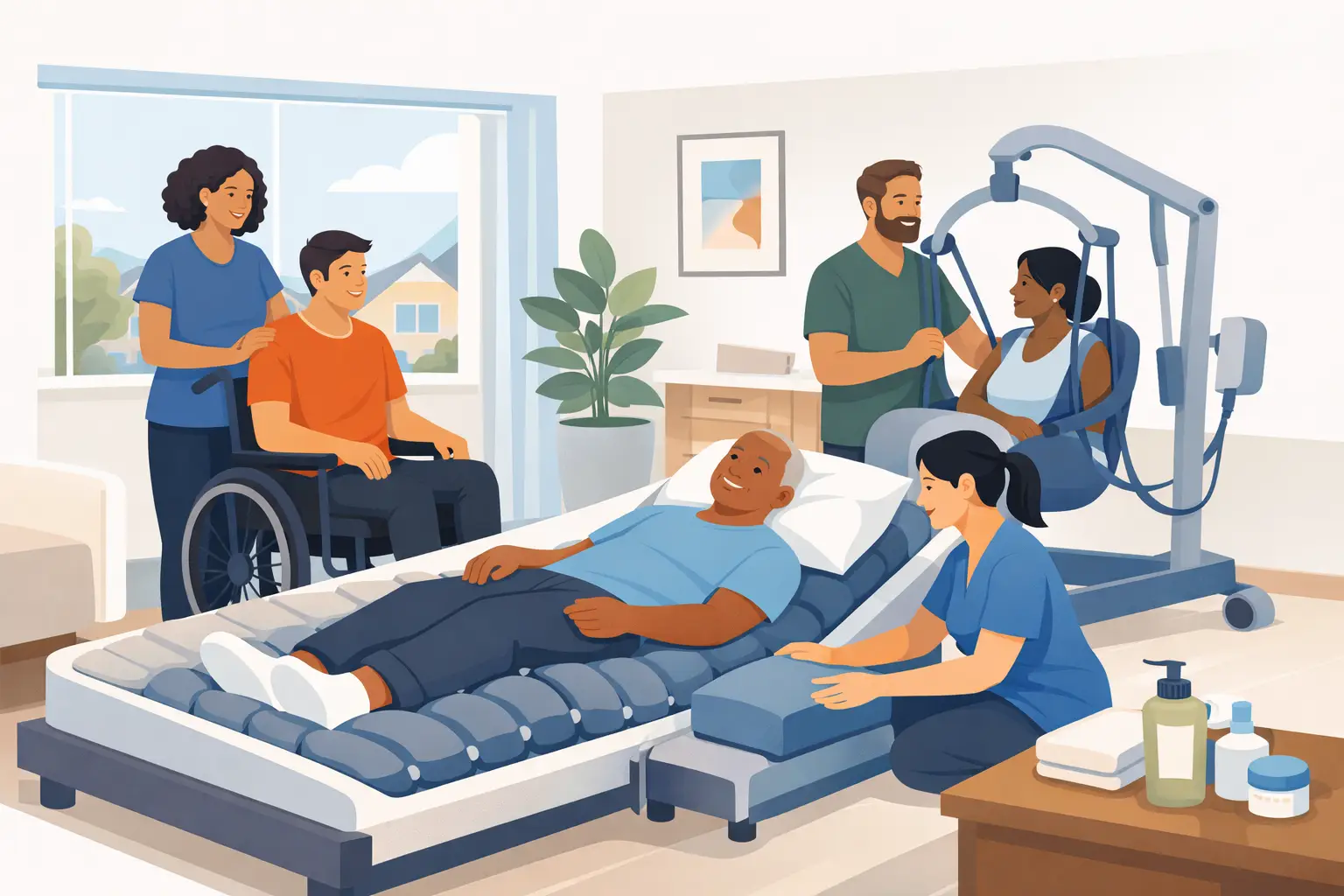
Safe, dignity-focused care starts with assessment rather than guesswork. A nurse needs to identify current pressure areas, inspect vulnerable sites, review movement patterns and understand what happens across a full day and night. That includes bed positioning, sitting tolerance, transfer methods, hygiene routines, continence management and the role of existing supports.
The next step is a care plan that people can actually follow. This may include repositioning schedules, instructions for skin checks, pressure area monitoring, continence-related skin protection, support surface recommendations, wound observation guidance and escalation steps. The wording needs to be clear enough for support workers and reassuring enough for families, while still being clinically accurate.
Pressure care also depends on training. If support workers are expected to complete turns, identify early skin change, protect vulnerable areas and document concerns, they need support worker training and clinical oversight. Without that, plans can drift, shortcuts can develop and early warning signs can be missed.
For participants with existing wounds or skin breakdown, pressure care becomes even more time-sensitive. In those situations, clinical support in the home may include wound care alongside pressure injury prevention, review of dressing routines, infection monitoring and communication with the broader care team.
When nursing input is needed urgently
There are some situations where waiting is risky. A non-blanching red area, blistering, broken skin, increased pain over a pressure point, unexplained odour, drainage, heat, swelling or signs of infection all need prompt clinical review. If a participant is suddenly less mobile, spending more time in bed, or refusing transfers because of pain, their pressure care plan may no longer be adequate.
Urgent review is also important when there has been a recent hospital discharge without a clear home routine, a new support team with limited handover, repeated skin issues despite basic prevention steps, or concerns that support workers are unsure how to carry out the plan safely. In those cases, practical nursing assessments can prevent a small issue becoming a hospital presentation.
For families, one of the hardest parts is knowing whether a skin change is minor irritation or the start of a pressure injury. For Support Coordinators, the challenge is often getting reliable clinical information quickly enough to act. A nurse-led service can bridge both gaps by assessing the participant, documenting risk and giving a clear direction for what needs to happen next.
Pressure care at home NDIS and support worker routines
Pressure prevention fails when the daily routine is built around convenience instead of clinical need. That does not mean every participant needs intensive repositioning at fixed intervals forever. It means the routine should reflect the person in front of you.
Some participants can manage weight shifts with reminders and monitoring. Others need two-person assistance, specialised positioning, continence-related skin protection and close supervision of any red areas. It depends on mobility, cognition, pain, manual handling needs and the skill level of those delivering care.
This is why support worker training and clinical oversight are so valuable. Training can cover pressure area checks, safe positioning, transfer-related skin risks, moisture management, documentation and what should trigger escalation. It also helps SIL providers and in-home support teams maintain consistency across shifts. When everybody understands the plan and the reasons behind it, there is less room for avoidable variation.
Documentation matters more than many people realise
Pressure care is clinical care. If risks, observations and instructions are poorly documented, participants are less safe and decision-makers have less evidence to work with. Good documentation is not just about compliance. It supports continuity, protects dignity and helps justify the right level of nursing input.
A useful nursing report should outline the participant’s presentation, identified pressure risks, current skin concerns, existing supports, clinical recommendations, training needs and any requirement for ongoing review. If there has been a change of circumstances, the report should make that clear in plain language supported by clinical reasoning.
For Support Coordinators and Plan Managers, that kind of documentation is far more useful than a general note saying the participant is at risk. It explains what is happening, why it matters and what supports are needed to keep the person safe at home.
The role of pressure care in broader complex health support
Pressure care rarely exists on its own. It often overlaps with continence care, wound care, medication support, diabetes management, reduced mobility and infection prevention. A participant with moisture-associated skin damage, for example, may need both pressure prevention and review of bowel or bladder routines. Someone with diabetes may have delayed healing and need closer monitoring of skin integrity. A person with pain or spasticity may need positioning reviewed because current methods are not sustainable.
That is why a narrow response often falls short. Complex health support works best when pressure care is considered as part of the whole clinical picture. Nurse-led NDIS care can bring these pieces together in a way that is practical for the home environment, not just theoretically correct.
In Adelaide, this is especially relevant for participants moving between hospital, home and community-based supports. Handover gaps are common, and pressure risks can rise quickly when routines are disrupted. Services such as Compassion Wings focus on helping participants stay safe at home through practical nursing assessments, clear care planning and clinical follow-up that support teams can actually use.
If pressure areas are recurring, support workers are unsure what to monitor, or a participant’s mobility or skin condition has changed, early nursing review is usually the safest next step. A timely assessment can protect skin, reduce stress for families and give the whole team clearer direction before the problem becomes much harder to manage.





1 Comment
How to Manage Complex Continence Needs - Compassion Wings
June 25, 2026[…] Sometimes the real issue is fluid timing, constipation, transfer delays, poor catheter management, pressure area risk, or a support team without clear clinical […]