

Infection Prevention in Home Supports Explained
A dressing that becomes wet under a shower cover, a catheter bag handled between tasks, or redness dismissed as “just irritation” can quickly change a stable care routine. Infection prevention in home supports is not about making a participant’s home feel clinical. It is about using practical, consistent precautions that protect health while preserving comfort, privacy and dignity.
For NDIS participants with wounds, pressure areas, catheters, stomas, diabetes, continence needs or reduced mobility, infection risk can be affected by small details in day-to-day care. Nurse-led NDIS care brings those details together through practical nursing assessments, clear care plans, support worker training and timely escalation when something changes.
Why infection risk needs clinical attention at home
Homes are not hospital wards, and they should not be treated as such. The goal is not sterile perfection. The goal is clean, safe care that reflects the participant’s actual health needs, the procedure being completed and the environment in which it happens.
A person may be more vulnerable to infection because of impaired skin integrity, poor circulation, diabetes, incontinence, an indwelling catheter, a stoma, swallowing difficulties, medication effects or limited ability to recognise and report symptoms. For some participants, a small wound or urinary change can deteriorate quickly. Others may communicate pain, discomfort or illness differently, so carers need to notice changes in behaviour, appetite, fatigue or usual function as well as obvious physical signs.
This is where generic instructions such as “use good hygiene” are not enough. Support workers and families need to know what good hygiene looks like for that individual, when gloves are needed, what equipment is single-use, what can be cleaned and reused, and who to contact if the routine no longer appears safe.
Infection prevention in home supports starts with assessment
Effective prevention begins before a worker opens a dressing pack or assists with a continence routine. A nurse should assess the participant’s diagnosis, current treatments, skin condition, infection history, allergies, mobility, cognition, communication needs and household setup. The assessment should also consider who provides care, how often tasks are performed and whether everyone has been trained for the level of support required.
A clinical care plan then turns assessment findings into usable instructions. It should be specific enough to guide safe action, without becoming a document that sits unread in a folder. For example, a wound plan should identify the wound location, dressing procedure, frequency, products authorised for use, signs of deterioration and escalation contacts. A catheter plan should explain drainage bag positioning, hygiene steps, fluid guidance where clinically appropriate, observations and when to seek medical review.
Clear documentation matters for more than compliance. It creates continuity when different staff attend, gives families confidence that changes are being recorded, and provides Support Coordinators with evidence of complex health support needs and clinical risk. Where circumstances change, nursing reports can help explain why additional assessment, training or ongoing oversight is required.
Hand hygiene is the foundation, not an afterthought
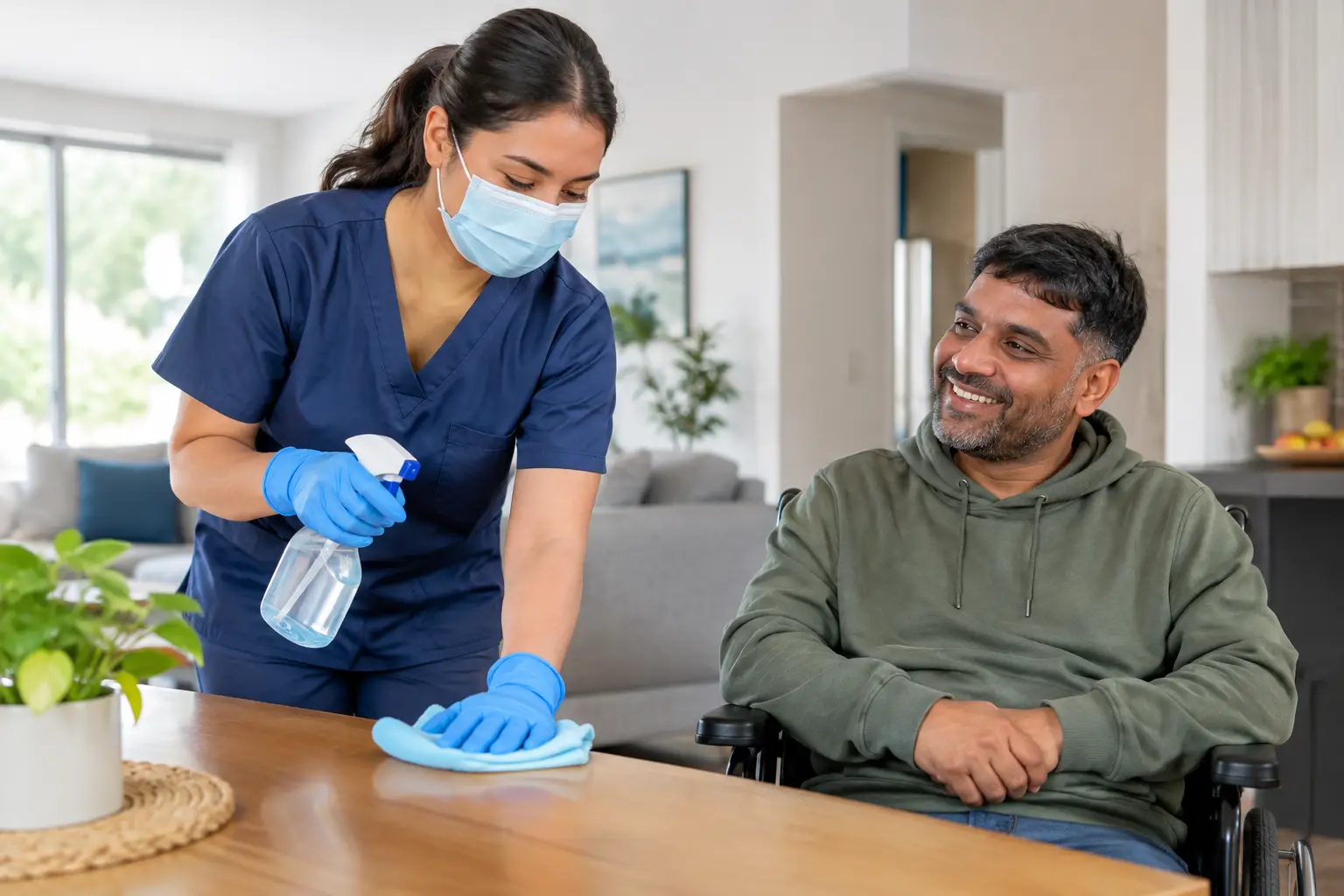
Hands are a common pathway for transferring germs between people, equipment and surfaces. Hand hygiene should happen before and after direct care, before an aseptic task such as dressing or catheter-related care, after contact with body fluids, and after removing gloves.
Gloves do not replace hand hygiene. They are used when there is a risk of contact with blood, body fluids, mucous membranes, non-intact skin or contaminated items. Gloves should be changed between dirty and clean tasks, then removed promptly. Wearing the same gloves while handling a continence product, touching a mobile, opening cupboards and preparing a dressing creates cross-contamination rather than protection.
The right method depends on the task. Soap and water are necessary when hands are visibly soiled. Alcohol-based hand rub can be appropriate when hands are visibly clean and quick hand hygiene is needed. A nurse can help establish a realistic routine for the home, including where supplies should be kept so workers are not forced to improvise.
Clean technique must match the care task
Not every procedure requires the same level of infection control. Overcomplicating a simple task can make care difficult to sustain, while underestimating a high-risk task can lead to preventable harm. The care plan should state whether standard precautions, clean technique or an aseptic technique is required.
Wound care is a common example. Some wounds require carefully controlled aseptic practice due to depth, location, drainage, healing stage or infection risk. Others may require clean technique under a nurse’s direction. The worker needs to understand the sequence of steps, which items must remain clean, and why a dressing pack or product cannot be reused once opened or contaminated.
Supplies should be stored clean, dry and protected from heat, moisture and household contamination. Expiry dates and package integrity need checking. Equipment such as blood glucose monitors or reusable clinical items should be cleaned according to their instructions and the participant’s plan. A cluttered kitchen bench or bathroom vanity is rarely an ideal treatment area, but a practical clean space can usually be organised.
High-risk routines that need closer oversight
Some care routines carry a higher infection risk because they involve an entry site, vulnerable skin or frequent contact with body fluids. These are situations where support worker training and clinical oversight are particularly valuable.
Wounds, pressure areas and fragile skin
Pressure injuries and skin tears can become infected when moisture, pressure, friction, poor nutrition, reduced circulation or delayed treatment are involved. Prevention includes regular skin observation, keeping skin clean and dry, managing continence-related moisture, following prescribed pressure care strategies and reporting changes early.
Redness that does not fade, increased heat, swelling, new pain, odour, drainage or a wound that is enlarging should not be managed by simply changing the dressing more often. It may need nursing review or urgent medical assessment, depending on the symptoms and the participant’s overall condition.
Catheter and urinary care
Catheter-associated infection risk can increase when tubing is disconnected unnecessarily, drainage bags are poorly positioned, the system is not kept closed, or hygiene around the catheter site is inconsistent. The drainage bag should generally remain below bladder level and off the floor, with tubing free from kinks and pulling. Individual clinical instructions may differ, particularly where there are complex urology needs.
Changes such as fever, new confusion, pain, chills, blood in urine, foul-smelling urine, reduced output or leakage can have several causes. They should be documented and escalated according to the care plan rather than assumed to be a routine catheter issue.
Stoma, bowel and continence routines
Peristomal skin can break down quickly if an appliance leaks, does not fit well or is removed harshly. Bowel and bladder care also involves frequent contact with body fluids, so consistent hand hygiene, correct disposal, surface cleaning and respectful handling of supplies are essential.
The participant’s dignity remains central. Care should be explained, privacy protected and personal preferences followed wherever safe to do so. Infection prevention works best when the participant understands the routine and can report what feels different from their usual baseline.
Diabetes and medication-related care
Blood glucose monitoring and injectable medication support require clean preparation, correct disposal of sharps and careful attention to injection sites. Reusing needles, sharing lancet devices or failing to rotate sites can increase risk and cause harm. Any medication-related task should be completed only by workers with the right training, delegation and documented competency for that participant.
Know when to escalate, not just what to clean
A safe home support team does not wait for a problem to become severe. Workers should document observations clearly and escalate according to the participant’s clinical plan. Urgent medical review may be needed where there are signs of systemic illness, rapid deterioration, severe pain, spreading redness, fever, reduced consciousness, breathing concerns or a participant who appears significantly unwell.
The following changes warrant prompt clinical attention, particularly for a person with a wound, catheter, stoma or complex health condition:
- fever, chills or a sudden decline in general wellbeing
- increasing redness, warmth, swelling, pain, odour or discharge around a wound or device site
- unusual leakage, blockage, bleeding or a major change in catheter, stoma or bowel output
- new confusion, marked drowsiness, poor intake or behaviour that is out of character.
Not every change means infection. A nurse can assess the pattern, identify immediate safety steps and advise whether GP, specialist, emergency or ongoing nursing review is appropriate. This avoids both delayed care and unnecessary alarm.
Making prevention workable for the whole support team
The best clinical plans are usable on a busy morning, not just accurate on paper. They identify the participant’s normal baseline, the exact task steps, infection-control precautions, required supplies, documentation expectations and escalation pathway. They are reviewed when the participant’s condition, treatment or workforce changes.
For Support Coordinators, early referral for nursing input can prevent repeated incidents, unclear worker responsibilities and fragmented documentation. It is particularly useful when a participant has a non-healing wound, recurring urinary concerns, skin breakdown, a new catheter or stoma, hospital discharge instructions that need translating into daily practice, or staff who need high-intensity support training.
Compassion Wings provides clinical support in the home across Adelaide, combining practical nursing assessments with clear reports for Support Coordinators, safe care plans and education for the people implementing daily routines. The purpose is not to add unnecessary complexity. It is to make complex health support safer, more consistent and easier for everyone to understand.
When a care routine starts to feel unclear, inconsistent or reactive, that is often the right time for a nursing review. Early clinical guidance can protect skin, reduce avoidable infections and help participants stay safe at home with care that remains calm, capable and dignity-focused.