

What Does Community Nursing Cover in Adelaide?
A dressing that keeps leaking, repeated catheter blockages, a new stoma, or skin that is beginning to break down can quickly turn a manageable routine into a clinical risk. For families and Support Coordinators trying to work out what does community nursing cover, the useful answer is not simply ‘care at home’. It is skilled nursing assessment, treatment, documentation and oversight for health needs that require clinical judgement.
For NDIS participants with complex health needs, community nursing can bring clinical support into the home and usual community setting. The goal is practical: help participants stay safe at home, protect dignity, identify deterioration early and make sure the people delivering daily supports understand exactly what safe care looks like.
What does community nursing cover?
Community nursing covers a broad range of clinical supports, but the exact scope depends on a participant’s health needs, treating team recommendations, risks and available funding. It is not a substitute for emergency care, a GP or hospital treatment. It is nursing input that helps translate a person’s clinical needs into safe, workable routines outside a hospital.
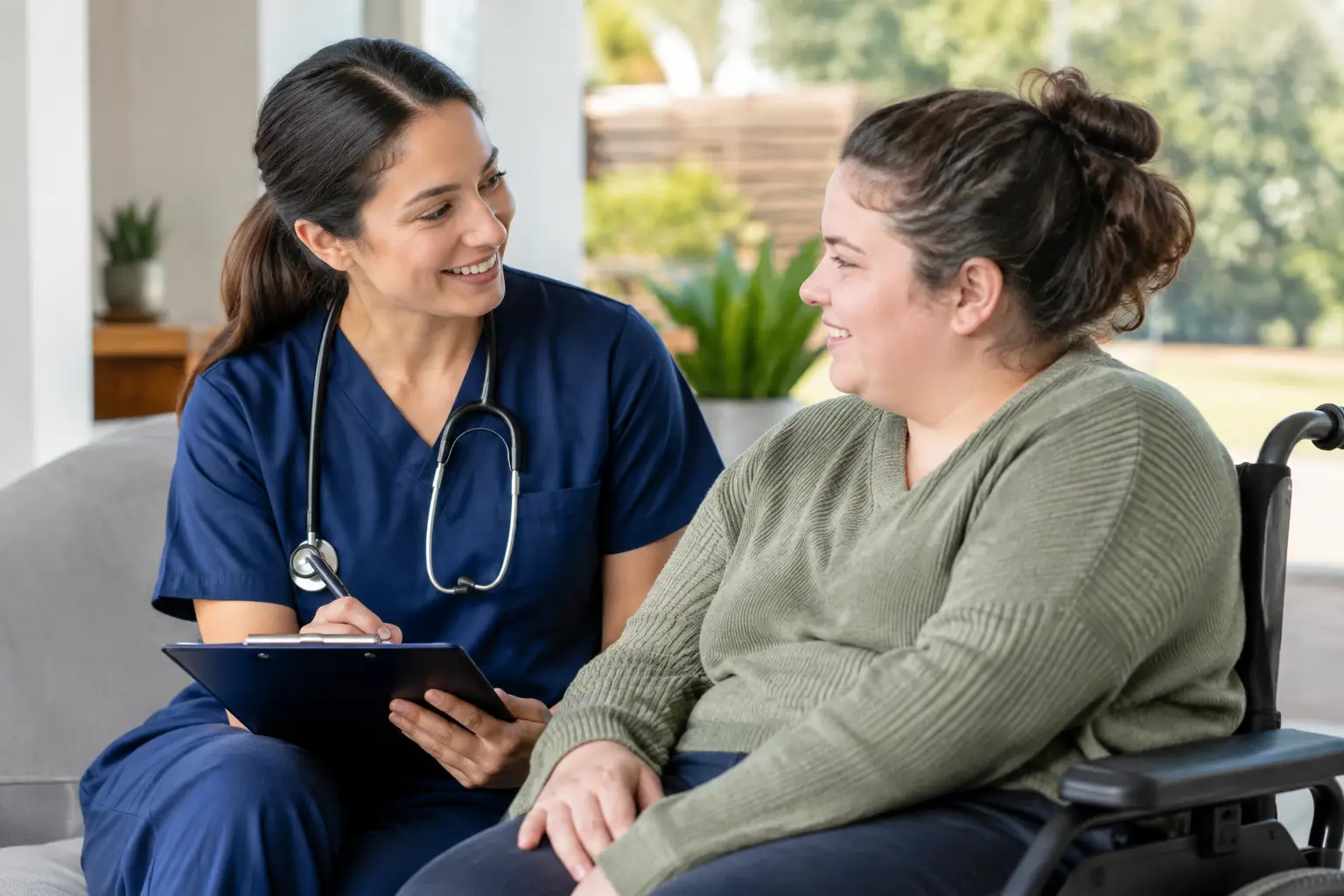
For NDIS participants, nurse-led NDIS care often starts with a practical nursing assessment. A nurse reviews the diagnosis, current routine, equipment and consumables, medication-related considerations, skin condition, infection risks, recent hospital admissions and the capability of the people supporting the participant. Just as importantly, they listen to what is not working. That may be pain during a bowel routine, inconsistent documentation, a wound that is slow to heal, or support workers who have not been trained for a high-intensity task.
The nursing response should be tailored rather than generic. One participant may need short-term wound monitoring after discharge. Another may need ongoing catheter care, a detailed continence assessment and staff competency training. The common thread is clinical judgement, clear escalation pathways and safe, dignity-focused care.
Continence, bowel and bladder support
Continence needs are often underestimated until they lead to skin damage, urinary tract infections, constipation, accidents, distress or avoidable presentations to hospital. Community nurses can assess bladder and bowel routines, fluid patterns, continence products, toileting supports, catheter use and the impact of a person’s health conditions or medications.
A continence assessment is more than a product recommendation. It can identify patterns, risks and practical changes that make a routine safer and more comfortable. Nursing recommendations may cover recording requirements, hygiene steps, skin protection, signs that need escalation and the support workers’ role within their training and delegated tasks.
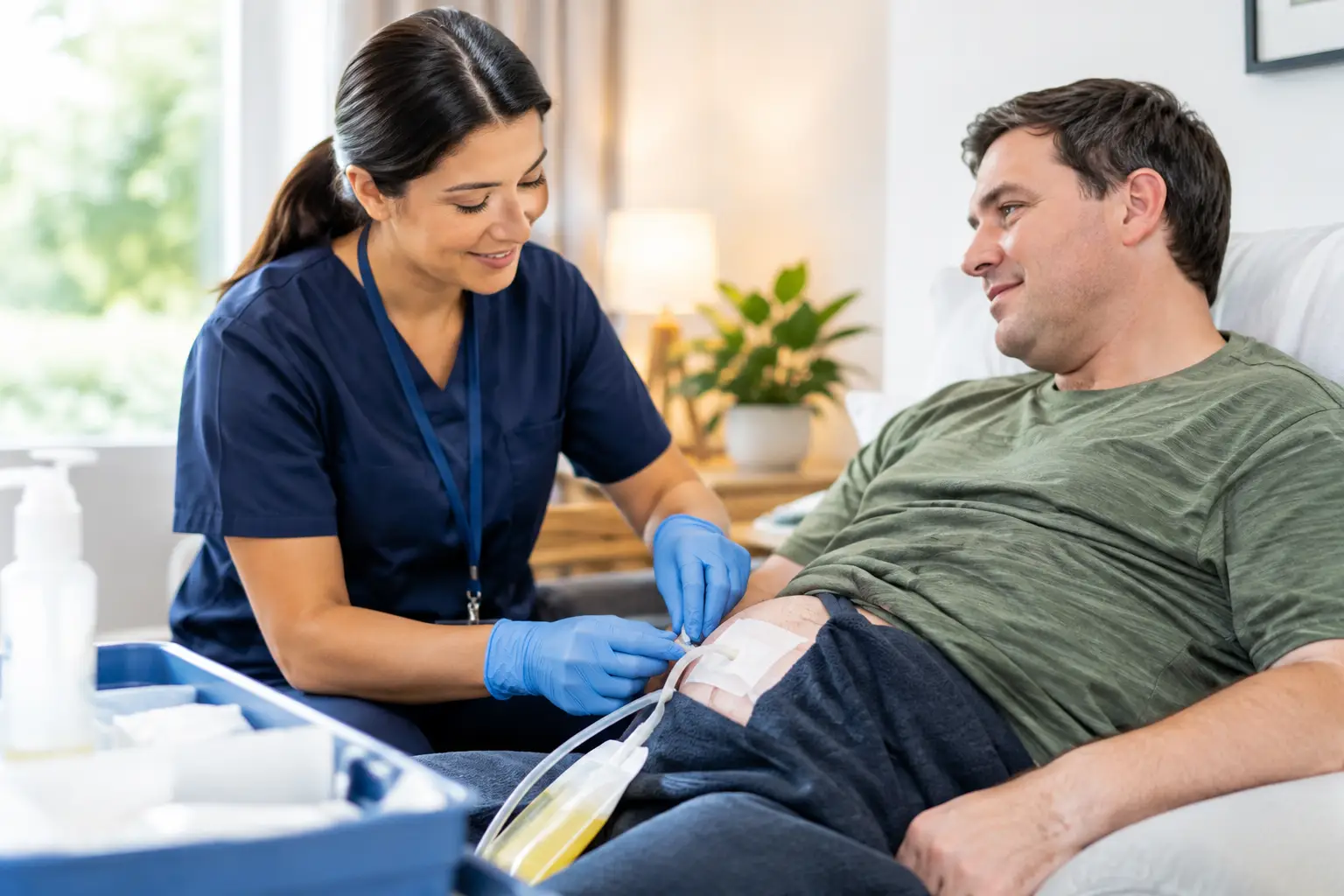
For participants with indwelling, suprapubic or intermittent catheters, community nursing may include catheter-related assessment, care planning, monitoring for blockage or infection, troubleshooting within scope and clear guidance on when medical review is required. Bowel care may also require nursing oversight when a participant has a prescribed routine, a history of constipation or impaction, autonomic dysreflexia risk, or requires high-intensity support.
Wound care, skin integrity and pressure care
A small area of redness can become a serious pressure injury if it is missed or managed inconsistently. Community nursing commonly covers wound assessment and dressing management, along with skin integrity monitoring and pressure injury prevention.
A nurse considers the whole clinical picture: wound type, size, exudate, odour, pain, surrounding skin, circulation, nutrition considerations, mobility, continence and infection indicators. They can establish a treatment plan in line with medical directions, monitor progress and escalate concerns when healing is delayed or deterioration is suspected.
Pressure care is preventive as well as reactive. A practical plan may set out skin checks, repositioning requirements, moisture management, what to document and when a support worker must contact a nurse or other clinician. This level of clarity matters where several people provide supports across a week. It reduces guesswork and helps maintain consistency.
Stoma care and complex clinical routines
Living with a stoma can be highly manageable when the routine is stable, but changes in output, leakage, peristomal skin damage or difficulties with appliances can affect comfort, confidence and health. Community nurses can assess stoma-related concerns, support safe routines, monitor skin integrity and communicate with the relevant treating team where specialist review is needed.
Community nursing also supports other complex health routines that need clinical oversight. Depending on the participant’s circumstances, this can include diabetes support, medication-related monitoring, enteral feeding-related clinical input where appropriately prescribed and within service scope, and post-hospital transition support.
The boundary is important. A capable community nursing service does not promise to manage every health issue independently. It works alongside GPs, hospitals, specialists, pharmacists and allied health professionals, escalates promptly and keeps roles clear. That protects the participant and gives families and referrers confidence that concerns will not be overlooked.
Clinical care plans that people can actually follow
A care plan is only useful if it is accurate, practical and understood by the people expected to use it. Community nurses develop clinical care plans that turn assessment findings into clear daily actions.
For example, a plan may explain the steps for a catheter routine, wound dressing schedule, pressure area checks, bowel protocol, infection warning signs, documentation expectations and escalation contacts. It should also state what sits outside a support worker’s role and requires a nurse, GP or urgent medical review.
Good plans preserve dignity. They use respectful language, account for the participant’s preferences and privacy, and avoid reducing a person to a set of tasks. They also need review. A plan written after a hospital discharge may need updating once the routine has been tested in the home environment or a wound changes.
Support worker training and clinical oversight
When support workers assist with high-intensity health supports, training cannot be a one-off handover or a folder left in a house. Community nursing can cover individualised support worker training based on the participant’s care plan, assessed needs and the specific tasks staff will perform.
Training may include demonstrations, supervised practice, competency assessment, documentation requirements and recognition of red flags. The purpose is not simply to show someone how to complete a task. It is to help them understand why each step matters and when they must stop and escalate.
Ongoing clinical oversight is equally valuable where needs are changing, staff turnover is high or a participant has recurring complications. A nurse can review incidents, update guidance, provide refresher education and ensure care practices remain aligned with the participant’s current condition. This is particularly important for catheter care, complex bowel routines, wound management, diabetes-related risks and pressure care.
Nursing reports for NDIS reviews and changed needs
Community nursing often includes clinical reports that describe a participant’s current health needs and the support required to manage them safely. For Support Coordinators and families, clear reports can be essential when preparing for a plan review or documenting a change of circumstances.
A useful nursing report sets out observed clinical risks, assessment findings, the consequences of inadequate support, recommended nursing inputs, training requirements and the rationale for ongoing oversight. It should be factual, participant-specific and written in language that decision-makers can follow.
This is not about making unsupported funding claims. It is about providing credible clinical evidence of what is happening now, what has changed and what safe implementation requires. Clear reports for Support Coordinators can also reduce delays caused by incomplete information, particularly after hospital admission, functional decline or a new diagnosis.
When should a Support Coordinator refer to a community nurse?
A referral is worth considering when a participant’s health routine is becoming difficult to manage, inconsistent or unsafe. Warning signs include recurrent infections, skin breakdown, frequent continence-related incidents, catheter issues, unexplained deterioration, medication concerns, hospital discharge with new clinical instructions, or staff who are unsure of their responsibilities.
Referral is also sensible before a problem becomes urgent. A nursing assessment can identify gaps in a care routine, clarify roles and provide documentation before a wound worsens or repeated incidents become a crisis. For Adelaide participants, Compassion Wings provides nurse-led NDIS care with practical assessments, support worker training and clinical documentation designed for real home routines.
To start well, provide recent clinical information where available, current care plans, relevant discharge summaries, medication information, incident history, details of the participant’s routine and the specific concern prompting the referral. Consent and the participant’s preferences should guide information sharing from the outset.
The right community nursing support should leave everyone clearer about the next safe step: the participant, family, support workers and coordinating team. When clinical needs are assessed early and documented properly, care becomes less reactive and far more reliable.