

9 Best Signs of Skin Breakdown to Watch
A small patch of redness on the heel or sacrum can look minor at the start. In practice, those early changes are often the best signs of skin breakdown, especially for people with limited mobility, continence concerns, diabetes, poor nutrition, reduced sensation, or complex health support needs at home.
For Support Coordinators, families and SIL teams, the challenge is not spotting a severe wound. It is recognising the early warning signs before the person ends up in pain, needing dressings, or presenting to hospital. Skin breakdown rarely appears out of nowhere. The body usually gives notice first.
Why early skin changes matter
Skin is a protective barrier. When it starts to fail, infection risk rises, pain often follows, and routine care becomes harder. Transfers, seating, continence care, showering and sleep can all be affected.
In an NDIS setting, early identification also matters because documentation, care planning and support worker routines often need to change quickly. A participant may need pressure care strategies, updated continence routines, wound care, support worker training and clear reports for Support Coordinators. Acting early can prevent a manageable skin issue becoming a complex clinical problem.
The best signs of skin breakdown
1. Redness that does not fade
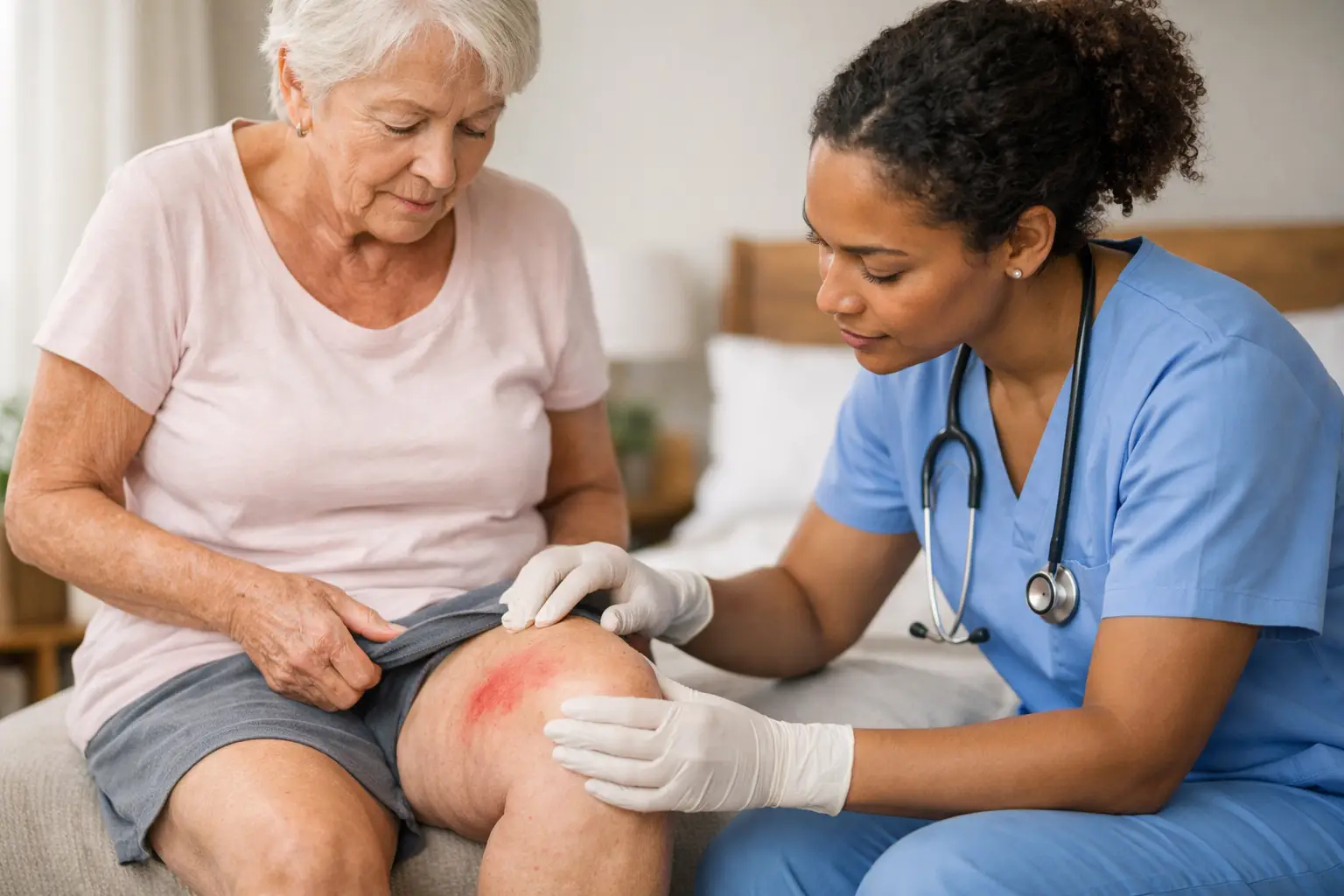
One of the earliest and most important signs is localised redness that stays after pressure is removed. If a person has been sitting or lying in one position and the area remains red 30 minutes later, that needs attention.
This matters most over bony areas such as the sacrum, buttocks, hips, heels, ankles and elbows. On darker skin tones, the area may not look bright red. It may appear purple, blue, deeper brown or simply different to the surrounding skin. A nurse-led assessment is useful when staff or family are unsure what is normal for that person.
2. Skin that feels warmer or cooler than nearby areas
Temperature change is often missed because people look first and touch second. A patch of skin that feels unusually warm can suggest inflammation or pressure damage developing. A cooler area can also be concerning, particularly if circulation is poor.
When combined with redness, swelling or tenderness, a temperature change is a strong early warning. This is especially relevant for participants who have reduced sensation and may not report discomfort.
3. Pain, tenderness or increased sensitivity
Pain can appear before the skin opens. If a participant says an area is sore when sitting, lying, being hoisted, or during continence care, it should not be brushed off as general discomfort.
Some people cannot explain pain easily, so behaviour changes may be the clue. They may resist repositioning, become agitated during personal care, guard one side of the body, or sleep poorly. Those changes deserve clinical review, particularly if the person is already at pressure injury risk.
4. Swelling or firmness
Skin breakdown is not always soft and weepy in the early stage. Sometimes the first sign is a firm, swollen patch under intact skin. It may feel boggy, tight or slightly raised.
This can indicate tissue damage below the surface, even before an open area appears. Support teams should be cautious here because the visible skin can underestimate what is happening underneath.
5. Shiny, thin or fragile skin
Skin that looks shiny, stretched, dry, flaky or paper-thin can break more easily during routine care. This is common in older participants, people with poor nutrition, those on certain medications, and anyone exposed to frequent moisture from sweat, urine, faeces or wound drainage.
Fragile skin often tears during transfers, tape removal, cleansing or clothing changes. That does not mean care was rough. It means the skin integrity was already compromised and the routine may need adjustment.
6. Moisture damage and persistent irritation
Not all skin breakdown starts with pressure alone. Continence issues frequently contribute. Skin exposed to urine or faeces can become red, sore, macerated and easier to damage. The area may look raw, patchy or inflamed, especially around the groin, buttocks, inner thighs and perineal region.
This is where practical nursing assessments make a real difference. If continence products are not the right fit, if toileting routines are inconsistent, or if cleansing products are irritating the skin, the problem can keep cycling. A continence assessment can help identify what is driving the irritation and what changes are needed to protect the skin.
7. Blisters, cracks or peeling
Once blisters or small skin splits appear, the risk has already escalated. A blister on the heel, peeling skin around the sacrum, or cracking in moist skin folds should be treated as more than a minor issue.
Openings in the skin create a pathway for bacteria and can worsen quickly if friction, pressure or moisture continues. At this point, many participants need more than observation. They may need wound care, changes to positioning, product review, and support worker training and clinical oversight.
8. Drainage, odour or a sudden change in the skin surface
Fluid, weeping, bleeding or odour are later signs, but they are still worth naming because families and disability teams sometimes wait too long before escalating. If the skin begins to leak fluid, look yellow or grey, or develop an unpleasant smell, prompt nursing review is warranted.
Odour does not always mean infection, but it should never be ignored. The same applies to slough, blackened tissue, or areas that look bruised without an obvious injury.
9. Skin changes linked to equipment or routine care
Medical and support equipment can create pressure or friction in predictable places. Catheter tubing, stoma appliances, continence pads, wheelchair cushions, bed surfaces, orthotics and transfer slings can all contribute when the fit, position or routine is not quite right.
The best signs of skin breakdown are sometimes found in patterns. Redness under an appliance, recurring marks from tubing, or pressure areas after long periods in a chair suggest the issue is not random. It points to a care routine or setup that needs review.
When skin changes need nursing input
Not every red mark becomes a wound. But it is risky to wait for open skin before calling in clinical support. Nursing input is appropriate when redness persists, the person has high-risk conditions, the cause is unclear, or staff are noticing repeat problems despite their usual care approach.
This is particularly true where there are multiple factors at play – pressure, continence, diabetes, reduced mobility, poor sensation, weight loss, or cognitive impairment. In these situations, isolated advice is usually not enough. The participant often needs clinical support in the home that considers the full picture, not just the skin patch itself.
A nurse can assess the area, identify likely causes, document baseline findings, guide immediate management and put practical strategies in place. That may include repositioning advice, continence changes, dressing selection, infection monitoring, pressure care planning and training for the support team.
What Support Coordinators and families should document
Good documentation helps everyone respond faster. If skin concerns are emerging, record where the change is, when it started, what it looks like, whether the person reports pain, and what may be contributing. Photos can assist if the participant consents and local policies allow it.
It also helps to note recent changes such as reduced mobility, illness, new equipment, weight loss, increased incontinence, or more time in bed or in a chair. These details matter because they often explain why the skin is failing now, even if the person has managed well before.
For Support Coordinators, clear reports for Support Coordinators from a nurse can support care planning, risk escalation and evidence gathering when a participant’s needs have changed. Strong clinical documentation is often what turns a vague concern into an actionable plan.
Preventing breakdown before it becomes a wound
Prevention is rarely one single fix. It usually comes from consistent daily routines done well. That includes regular repositioning, checking vulnerable areas, managing moisture, using suitable continence products, supporting hydration and nutrition, and making sure support workers know what to look for.
The trade-off is that prevention can seem time-consuming until compared with the time, cost and distress involved in treating a wound. For participants with complex needs, support worker education is often the difference between a plan that exists on paper and one that works safely in real life.
In nurse-led NDIS care, skin integrity monitoring should never sit in isolation. It links closely with continence, mobility, diabetes support, catheter or stoma care, and the quality of everyday routines. When those pieces line up, participants are better supported to stay safe at home.
Best signs of skin breakdown are often subtle
The early signs are not always dramatic. A red heel, a sore patch during pad changes, fragile skin under a stoma appliance, or repeated irritation on the buttocks can be the first indicator that something needs to change.
That is why practical nursing assessments matter. They help teams move from reacting to wounds to preventing them, while protecting participant dignity and making daily care safer. If a skin concern keeps returning, gets worse, or does not quite make sense, trust that early concern and have it assessed before the skin says more.




2 Comments
How to Choose NDIS Home Nursing for Stoma Care - Compassion Wings
July 11, 2026[…] skin damage can quickly become painful and difficult to manage. Redness, weeping, broken skin, bleeding, […]
Pressure Care for Safer Support at Home - Compassion Wings
September 2, 2026[…] a change. Daily observation of high-risk areas can identify redness, warmth, swelling, tenderness, broken skin, blisters, bruising or changes in skin colour before they become more […]