

Nurse Led Care vs Standard Support
A participant has repeated skin breakdown, two recent hospital presentations and support workers doing their best with a catheter routine that keeps changing. On paper, that can look like a support issue. In practice, the difference between nurse led care vs standard support is often the difference between reacting to problems and clinically managing them before they escalate.
For participants with complex health needs, the question is not which model sounds more supportive. It is which model is safe, appropriate and able to provide the right level of assessment, documentation and oversight. For Support Coordinators, families and SIL teams, getting that distinction right can reduce risk, prevent avoidable deterioration and make NDIS decision-making much clearer.
What nurse led care vs standard support really means
Standard support usually focuses on day-to-day assistance delivered within an established routine. That may work well when care needs are stable, low risk and clearly defined. If the participant’s skin is intact, medications are straightforward and there are no significant continence, wound, stoma or catheter concerns, routine support may be enough.
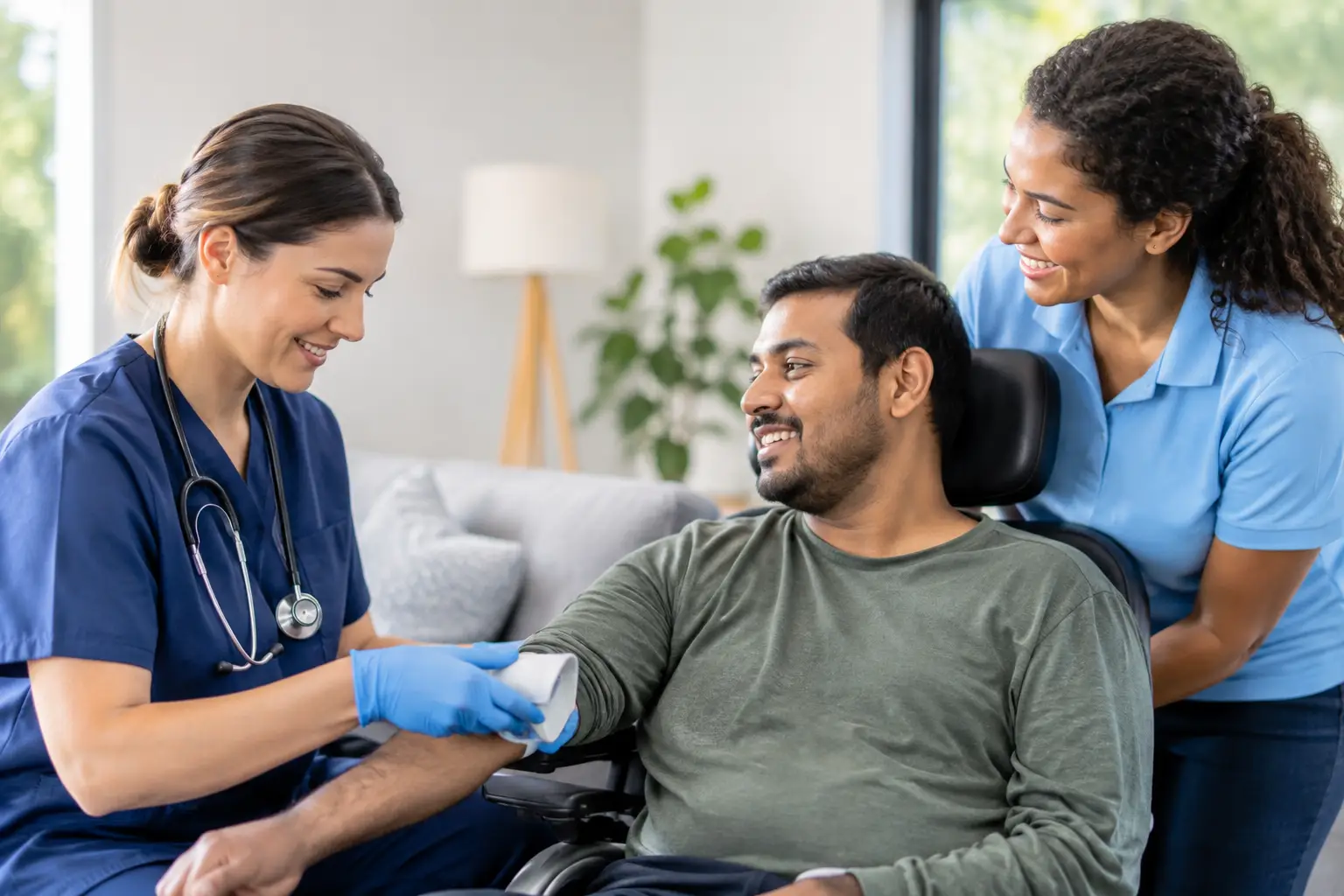
Nurse-led NDIS care is different. It starts with clinical reasoning. A nurse is not only assisting with a task but assessing the participant’s condition, identifying risks, adjusting care recommendations, documenting changes and escalating concerns when needed. That matters when there are pressure injuries, recurrent UTIs, bowel and bladder complications, unstable diabetes management, complex medication support or support workers who need training and clinical oversight.
The practical difference is this: standard support follows a plan, while nurse-led care can assess whether the plan is still safe.
Where standard support can fall short
Standard support is not the wrong model in itself. The problem comes when clinical needs are treated as routine tasks. A dressing change, for example, is not just a dressing change if the wound has changed in size, exudate, odour or pain level. Catheter care is not routine if there are repeated blockages, leakage, discomfort or signs of infection. Continence support is not simple if current products are failing, skin integrity is declining or the participant’s usual pattern has changed.
Without nursing input, teams can end up managing only the visible problem. They might replace products more often, increase prompting or ask support workers to monitor things more closely. Sometimes that helps for a short time. But if the underlying cause has not been clinically assessed, the issue often returns.
This is where families can feel stuck and Support Coordinators can feel pressure building. There may be concerns from providers, incident reports, discharge recommendations or growing evidence that the participant is not as safe at home as everyone hoped. What is missing is not goodwill. It is practical nursing assessments and clear clinical direction.
When nurse-led care is the safer option
Nurse-led care becomes especially important when health needs are changing, recurring or difficult for non-clinical teams to interpret. Pressure care is a clear example. A participant who spends long periods in bed or a chair may need more than repositioning reminders. They may need a skin integrity review, pressure area monitoring, a clinical care plan and training for the people providing daily support.
The same applies to continence and bowel or bladder routines. If a participant is experiencing leakage, constipation, frequent accidents, skin irritation or repeated infections, nursing input can help identify patterns, review current management and recommend practical changes. A proper continence assessment is often more useful than simply trying different products without clinical guidance.
Stoma care, catheter-related support, diabetes support and medication oversight also sit firmly in the space where nurse-led NDIS care can make a substantial difference. These are not only about completing tasks correctly. They require observation, judgement, documentation and the ability to respond when a participant’s condition changes.
Safety is only part of the picture
A common misunderstanding is that nurse-led care is only about higher clinical skill. Skill matters, but so does documentation. In the NDIS space, good care often depends on good evidence. Support Coordinators and Plan Managers are regularly asked to justify why a participant needs a particular level of support, additional nursing input or revised funding due to a change of circumstances.
Standard support notes may record what happened on shift. That is useful, but it is not the same as a clinical report. Nursing reports can connect presentation, risk, care needs and recommendations in a way that supports safer planning. They can explain why a participant needs clinical support in the home, why support worker training is required, or why a current arrangement is no longer appropriate.
That is often the bridge between a concern being noticed and a concern being actioned.
Nurse led care vs standard support for Support Coordinators
For Support Coordinators, the choice between nurse led care vs standard support is often about risk management and clarity. If multiple providers are involved and no one is taking clinical ownership, concerns can drift. One team notices redness. Another team notes increased pain. A family member reports poor appetite. A hospital discharge summary mentions wound management. Unless that information is assessed together, the overall picture can be missed.
Nurse-led care brings structure to that complexity. It can provide clear reports for Support Coordinators, practical recommendations for implementation and support worker training and clinical oversight where needed. That helps everyone work from the same plan rather than relying on informal updates or inconsistent shift notes.
It also helps with timing. When a participant’s condition is deteriorating, delays matter. Fast, clinically appropriate assessment can prevent small issues becoming major ones, particularly where infection risk, skin breakdown or poor bowel and bladder management are involved.
The trade-off: not every participant needs nursing input all the time
This is where nuance matters. Not every participant requires ongoing nurse-led care, and not every support issue is a clinical issue. Some participants need a one-off assessment, a care plan update or targeted training for their support team rather than regular nursing visits. Others need ongoing clinical oversight because their health status is unstable or the risk of complications is high.
The right model depends on the participant’s presentation, the reliability of existing routines, the capability of the team around them and how quickly their condition can change. If there is uncertainty, that alone can be a reason to involve a nurse. A practical assessment can clarify whether standard support remains appropriate or whether more formal clinical involvement is needed.
Signs it is time to refer for nursing input
Referral is worth considering when there are repeated hospital presentations, recurrent infections, wounds that are slow to heal, pressure areas, catheter or stoma complications, continence issues affecting skin integrity, complex medication concerns, diabetes management difficulties or support workers needing guidance with high-intensity care tasks.
It is also appropriate when documentation is not keeping up with the participant’s needs. If a team is trying to manage complex health support without current care plans, nursing assessments or clinically useful reports, risk can increase quickly. Families may notice things are not quite right long before the paperwork catches up.
In those situations, safe, dignity-focused care starts with proper assessment rather than assumptions.
What good nurse-led care should deliver
Effective nurse-led care should not create more confusion. It should simplify complex situations. That means identifying the issue clearly, assessing what is happening, documenting risk, giving practical recommendations and making sure the people delivering daily care understand what to do.
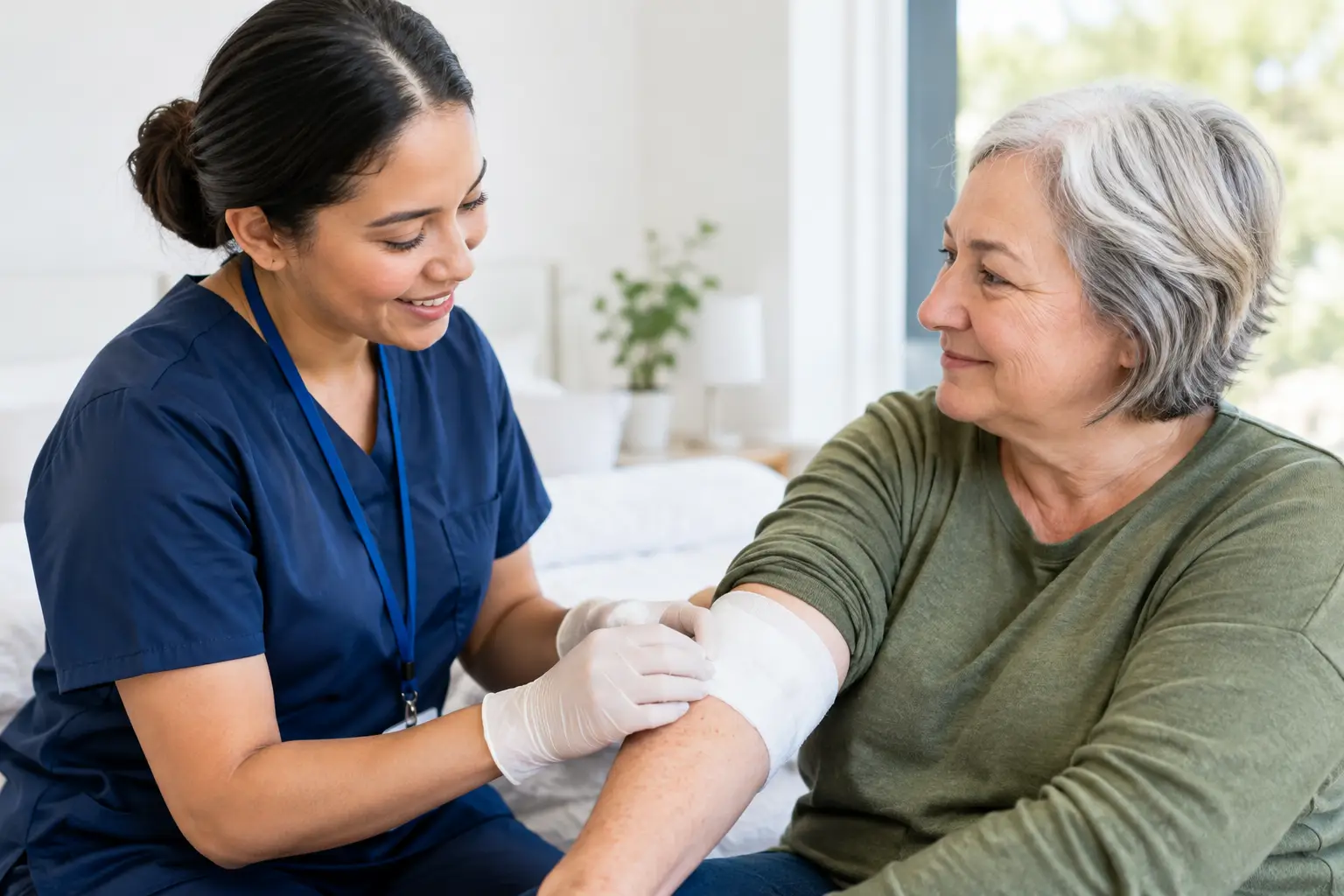
In home and community settings, the best outcomes often come from a combination of direct nursing support and education for the broader team. A nurse may assess a wound, develop a pressure care plan, review continence concerns or provide catheter-related guidance, while also training support workers to implement the plan safely. That model helps participants stay safe at home without expecting non-clinical staff to make clinical decisions beyond their role.
It also protects dignity. Sensitive areas such as bowel care, bladder management, stoma support and skin integrity need more than task completion. They need respectful, consistent care that reduces distress and avoids preventable complications.
For Adelaide participants with complex needs, and for the Support Coordinators and providers around them, that level of clinical oversight can make daily care more stable and future planning more defensible. Compassion Wings works in exactly this space, with practical nursing assessments, clear documentation and nurse-led support designed for complex home-based care.
When care needs are simple and stable, standard support may be enough. When health needs are changing, recurring or carrying real clinical risk, nursing input is not an extra. It is often what allows the whole care arrangement to work safely, clearly and with the right level of confidence.