
Home Visit Nursing for Wound Healing
A wound that looks small on Monday can become a major problem by Friday if the dressing is wrong, pressure is not relieved, or early infection is missed. For NDIS participants with complex health needs, home visit nursing for wound healing is not just about changing a dressing. It is about clinical assessment, risk management, documentation, and keeping daily care safe in the home.
For families, the concern is often simple – will this heal, and how do we stop it getting worse? For Support Coordinators and SIL teams, the pressure is different – who is monitoring the wound, is the care plan clear, and is there enough clinical evidence to support ongoing supports? This is where nurse-led NDIS care matters. Wounds rarely sit in isolation. They are often linked to continence issues, reduced mobility, poor skin integrity, diabetes, pressure risk, nutrition concerns, or inconsistent care routines.
Why home visit nursing for wound healing matters
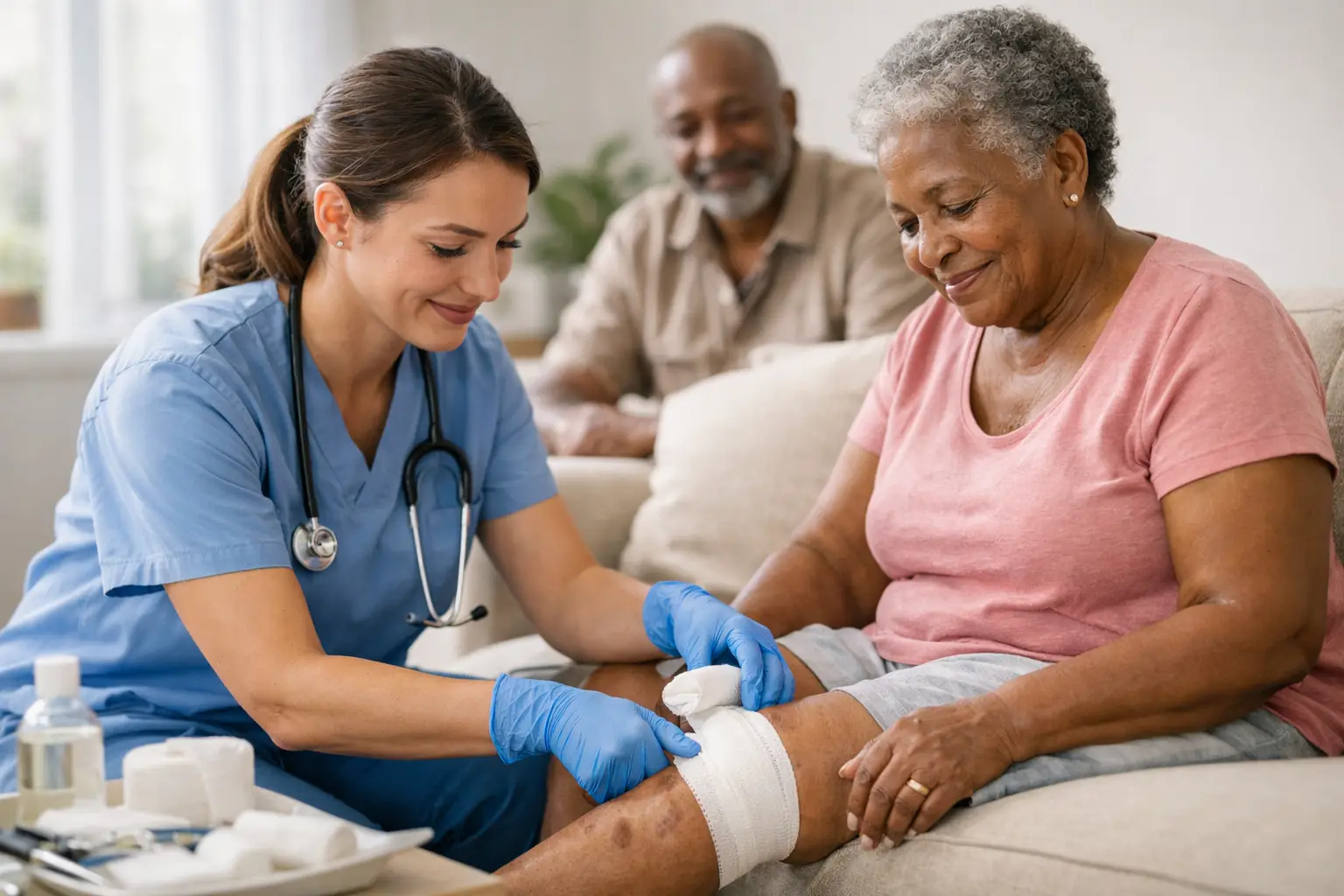
Wound healing at home can work well when the right clinical supports are in place. It allows the participant to stay in a familiar environment, reduces unnecessary hospital presentations, and makes care more realistic because the nurse can see how transfers, seating, bedding, continence products, and support worker routines affect the wound day to day.
That home-based view is valuable. A wound on the lower leg may not improve if oedema management is inconsistent. A pressure injury may keep reopening if the participant is sitting for long periods in a chair that is no longer suitable. A skin tear may happen repeatedly if fragile skin, poor manual handling, and rushed personal care routines are not addressed together. Wound healing improves when the cause is assessed, not just the surface area.
This is why clinical support in the home often leads to better decision-making. The nurse is not working from assumptions. They can assess the wound, the environment, the routines around it, and the practical barriers that affect healing.
What a nurse assesses during home wound care visits
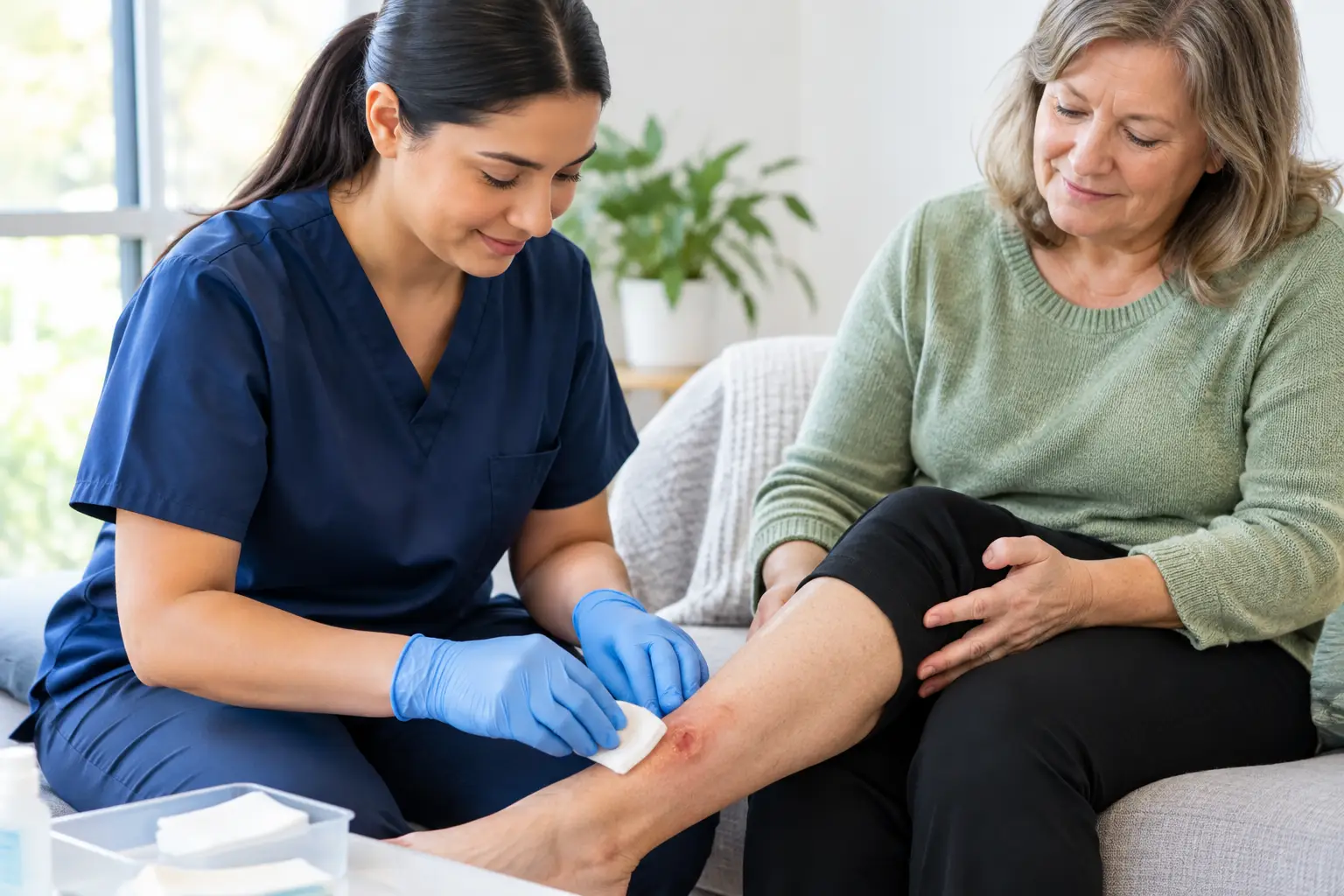
Good wound care starts with a proper assessment. That includes the wound itself, but it also includes the participant’s broader health picture. A nurse will usually look at wound type, size, depth, exudate, odour, surrounding skin, pain, signs of infection, and whether healing is progressing as expected.
Just as importantly, the nurse considers the drivers behind the wound. Is this pressure-related? Is moisture from incontinence contributing to skin breakdown? Is there reduced sensation, vascular disease, diabetes, or poor positioning? Are support workers following a consistent routine, or is care varying across shifts? These details shape the treatment plan.
Practical nursing assessments also help identify when a wound is outside the scope of routine community management and needs escalation. If tissue is deteriorating, infection is suspected, pain is increasing, or the wound is not responding to treatment, the participant may need GP review, specialist input, or urgent medical assessment. Early escalation can prevent a manageable issue from becoming a hospital admission.
The link between wounds, pressure care and continence
In NDIS settings, wounds often overlap with other high-risk clinical issues. Pressure injuries are a clear example. If a participant has limited mobility, spends long periods in bed or a chair, or relies on others for repositioning, wound healing depends on pressure care being done properly every day.
Continence also matters more than many people realise. Moisture-associated skin damage can quickly weaken the skin and make breakdown more likely. If dressings are repeatedly exposed to urine or faecal contamination, healing becomes harder and infection risk rises. In these cases, wound care cannot be separated from bowel and bladder care. The participant may need a revised continence routine, different products, stronger skin protection, and clearer instructions for support workers.
This is where complex health support needs a joined-up approach. A nurse-led service can assess the wound while also considering continence, pressure relief, skin integrity, and the practical routine required to maintain safe, dignity-focused care.
When Support Coordinators should refer for nursing input
Some wounds are straightforward. Others are not. Support Coordinators should consider referral when a wound is slow to heal, recurring, difficult for support staff to manage, or linked to a broader decline in skin integrity. Referral is also sensible when there are concerns about infection risk, pressure injury development, dressing adherence, continence-related skin damage, or a lack of clinical direction across a care team.
Another common issue is inconsistency. One worker applies a dressing one way, another does something different, and nobody is quite sure what the current plan is. That creates clinical risk and anxiety for everyone involved. A nurse can establish a clear wound care plan, provide support worker training and clinical oversight, and document what needs to happen at each visit or shift.
For participants with frequent hospital presentations due to wound complications, home nursing can also support discharge planning and continuity of care. In these cases, clear reports for Support Coordinators are especially useful. They help explain the participant’s current needs, the clinical risks, and why ongoing nursing or trained support implementation is required.
What effective home wound care looks like
Effective wound care at home is rarely just a dressing schedule. It usually includes regular review, appropriate products, monitoring for deterioration, and a realistic plan that the participant and support team can follow.
That plan may include pressure care strategies, repositioning routines, skin inspections, hygiene measures, continence management, pain monitoring, and escalation instructions. If support workers are involved, they need practical guidance, not vague directions. They should know what to observe, what to report, what changes are urgent, and what parts of care sit within nursing oversight.
Documentation matters here. In NDIS settings, clinical records are not just paperwork. They show what risks have been identified, what interventions are in place, and what evidence supports ongoing support needs. This can be important for plan reviews or change of circumstances, especially when wound care is prolonged or linked to declining function.
Home visit nursing for wound healing and participant dignity
Wounds can be distressing. They may affect sleep, comfort, mobility, confidence, and willingness to engage with care. Some participants feel embarrassed by odour, leakage, or wound location. Others become frustrated when multiple people are involved and no one seems to have a clear plan.
Home-based nursing can make this easier. Care in a familiar environment often feels less rushed and more respectful. The nurse can work at the participant’s pace, explain what is happening in plain language, and adjust care to suit the person’s routine and preferences where clinically safe to do so.
Dignity also means reducing preventable complications. Repeated dressing failures, unmanaged exudate, avoidable pressure areas, or unclear instructions can make a participant feel like their care is out of control. A clinically sound plan restores structure and confidence.
What information helps before onboarding
A faster, safer start usually happens when the referrer can provide clear background information. That might include the wound history, hospital discharge details if relevant, current dressing regime, GP or specialist involvement, medication information, known allergies, continence concerns, mobility status, and whether support workers or SIL staff are involved in daily care.
Photos, previous wound charts, and details about recent deterioration can also help, provided they are shared appropriately and with consent. If there are immediate concerns such as spreading redness, fever, increasing pain, malodour, or sudden skin breakdown, that should be flagged early so urgency can be assessed.
For Adelaide referrers managing participants across home and shared living settings, timely nursing input can save days of uncertainty. An experienced nurse-led provider such as Compassion Wings can assess, document, educate staff, and put a practical care structure in place quickly.
It depends – the realities of healing at home
Not every wound heals quickly, even with good nursing care. Some wounds are affected by circulation problems, diabetes, pressure loading, poor nutrition, complex medical history, or limited ability to tolerate treatment. Sometimes the goal is complete healing. Sometimes it is preventing further deterioration, reducing pain, managing exudate, and maintaining skin integrity as safely as possible.
That is why realistic planning matters. Families need honest communication. Support Coordinators need clear clinical reasoning. Support workers need training that matches the participant’s actual risks. Home nursing works best when everyone understands the goal, the limits, and the escalation points.
The strongest wound care is rarely the most complicated. It is careful assessment, consistent routines, practical recommendations, and ongoing review before small problems become serious ones. When that happens in the home, participants are better supported to stay safe at home with care that is clinically sound, respectful, and workable in everyday life.
If a wound is not improving, if skin breakdown keeps returning, or if the care team is relying on guesswork, nursing input is usually needed sooner rather than later.