
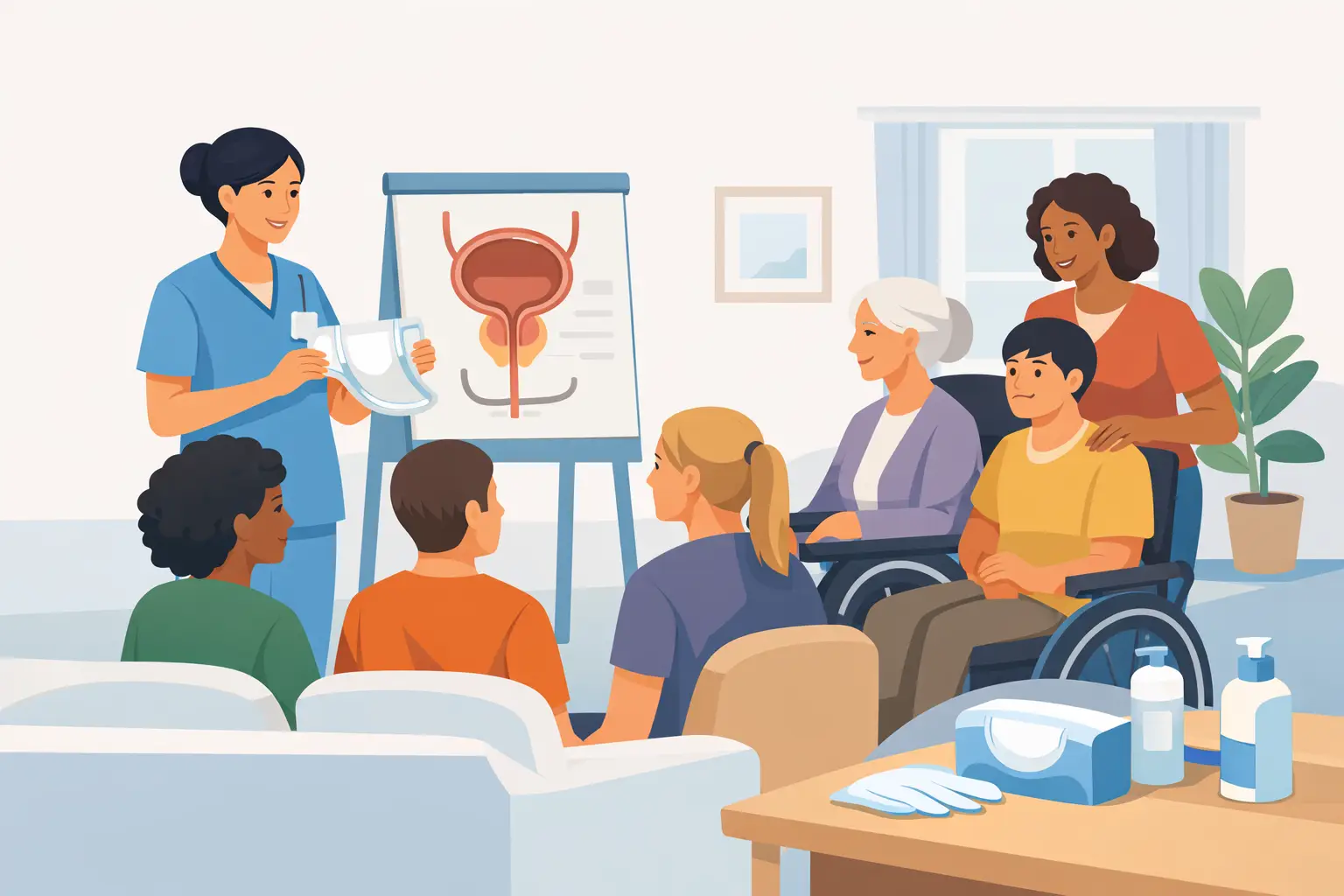
Who Can Train Support Workers on Continence Care Plans?
When a participant has repeated leaks, skin breakdown, constipation, catheter complications or avoidable overnight call-outs, the question usually arrives late: who can train support workers on continence care plans? By that point, families are stressed, Support Coordinators are chasing answers, and support teams may be doing their best without enough clinical direction. Continence care is not just a routine task. It often involves assessment findings, risk management, infection prevention, documentation, dignity, and clear limits around what support workers can safely do.
For most participants with straightforward needs, a support worker can follow an existing plan if it is clear, current and within their role. The problem is that many continence situations are not straightforward. Bowel and bladder care can change quickly when there is reduced mobility, skin fragility, cognitive change, spinal injury, diabetes, constipation, recurrent urinary tract infections, stoma care needs or catheter-related issues. In those cases, training should come from a clinician with the right scope, experience and accountability – most commonly a Registered Nurse with continence knowledge and experience in disability and community care.
Who can train support workers on continence care plans?
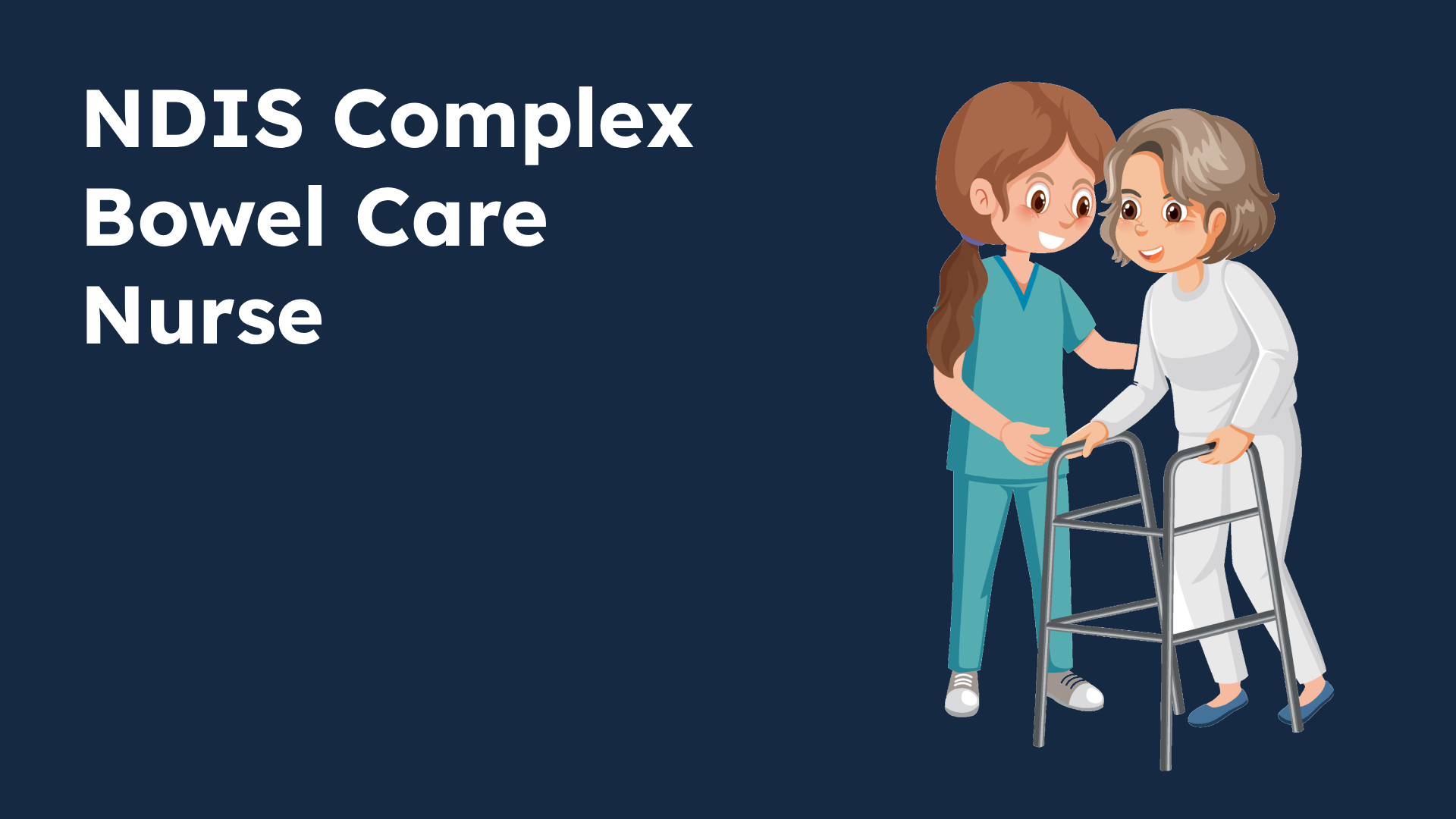
The safest answer is a suitably qualified nurse who understands continence assessment, community-based risk, and the participant’s clinical needs. In practice, this is often a Registered Nurse providing nurse-led NDIS care and clinical support in the home. The nurse should be able to assess the participant, interpret risks, explain the care plan in practical terms, and confirm what support workers can and cannot do.
That matters because training is not simply reading a plan aloud or showing someone where products are kept. Proper training links the participant’s condition, routine, warning signs, hygiene requirements, skin integrity risks and escalation steps into one workable approach. It also creates accountability. If a support worker is expected to assist with bowel and bladder routines, the training should be based on current clinical recommendations, not guesswork or habits passed from one rostered worker to the next.
There can be shared input from other clinicians. A continence nurse, clinical nurse consultant, treating medical practitioner or relevant specialist may contribute recommendations. Allied health input can sometimes support positioning, transfers or environmental considerations. But when the task is training support workers to deliver day-to-day continence support safely in the home, a Registered Nurse is typically best placed to provide direct education, competency-based guidance and clinical oversight.
Why informal handover is usually not enough
A common risk in community services is relying on verbal handover. One worker tells the next what to do, with a few notes in the communication book, and everyone assumes the routine is settled. That can work for simple preferences. It does not work well for clinical care.
Continence plans often include details that can be missed if training is casual: which products are appropriate, how often skin should be checked, what constipation red flags matter, when a catheter bag change needs escalation, what output patterns are abnormal, how fluid intake affects the routine, and when the participant needs medical review. Without structured training, support workers may overstep, under-escalate or unintentionally compromise dignity.
From a Support Coordinator’s point of view, this is also a documentation issue. If there is an incident, repeated skin damage, infection, or a breakdown in supports, it helps to show that the participant had practical nursing assessments, a clear care plan, and support worker training and clinical oversight. That gives everyone more confidence that care is being delivered safely and that concerns are being identified early.
What a qualified nurse should cover in training
Good training is participant-specific. It should explain the person’s diagnosis or functional issues only as far as needed for safe care, then move quickly into practical routine. Support workers need to understand the continence plan itself, infection control steps, product use, skin observations, manual handling considerations, privacy and consent, and exactly when to escalate.
They also need clarity about scope. Some supports sit comfortably within a trained support worker role. Others require direct nursing input, delegation, or a different level of clinical review. This is where nurse-led education protects both the participant and the worker. It reduces the chance of well-meaning staff improvising during a shift when something changes.
Training should also be documented. That usually means a written plan, attendance record, competency notes where relevant, and clear instructions about review timeframes. If the participant’s condition changes, the training should change too. A continence care plan is not a set-and-forget document.
When nursing input is clearly needed
Some referrals are obvious. If a participant has a catheter, recurrent urinary tract infections, bowel dysfunction, a stoma, pressure injury risk, skin breakdown, frequent incontinence-associated dermatitis, or sudden changes in continence status, nursing involvement should not be delayed. The same applies where support workers are uncertain, family members are carrying too much of the clinical load, or the service is seeing repeated incidents with no clear cause.
There are also less obvious cases. A participant might seem stable, but the routine is taking too long, products are being used inconsistently, there are frequent laundry loads, overnight supports are escalating, or the person is withdrawing from social activities because continence care no longer feels manageable. These are practical signs that the current plan may not be working. A nurse can assess whether the issue is product selection, timing, hydration, bowel pattern, skin care, transfer difficulty, staffing skill mix, or an emerging medical problem.
For providers and SIL teams, this is often the difference between reacting to daily problems and having a clinically sound routine that helps the participant stay safe at home.
Can an experienced support worker do the training?
Experience is valuable, but experience alone is not the same as clinical qualification. A very capable senior support worker may help reinforce a routine once a nurse has assessed the participant and set the plan. They may also assist with orientation for new team members. What they should not do is create, alter or clinically justify a continence care plan beyond their role.
That distinction matters because continence care can involve judgement about skin deterioration, bowel obstruction risk, infection signs, hydration concerns, autonomic dysreflexia risk in some participants, catheter complications, and the need for urgent escalation. Those are clinical decisions. Support workers need practical guidance, but they should not be left carrying clinical responsibility without the right training and oversight.
What referrers should look for in a training provider
If you are arranging training, ask whether the person delivering it has relevant nursing registration, continence experience, and familiarity with complex health support in community settings. Ask whether they will assess the participant directly, tailor the plan to the home environment, and provide clear reports for Support Coordinators. It is worth checking whether they understand NDIS documentation expectations as well, because the strongest training is paired with usable clinical evidence.
A good provider will also be realistic. Not every continence issue can be solved with one visit or one in-service session. Sometimes the first step is stabilising skin integrity, reviewing the current routine, speaking with the GP or treating team, and then building a practical care plan that support workers can actually follow. Good training is specific, workable and reviewable.
In Adelaide, this is particularly relevant for participants with high-intensity needs who are supported across multiple shifts or by more than one provider. The more people involved, the more important consistency becomes.
The value of nurse-led training for participants and teams
When continence care training is done properly, the benefit is felt immediately. The participant gets safer, dignity-focused care. Families are less likely to feel they must supervise every detail. Support workers become clearer and more confident in what they are doing. Support Coordinators have clinical documentation they can rely on when risks escalate or when additional evidence is needed.
Just as importantly, nurse-led training creates a pathway for review. Continence needs change. A participant may become less mobile, recover from illness, develop skin issues, start new medication or return home after hospital. A nurse-led service can reassess, update the care plan, retrain the team and document what has changed. That ongoing clinical oversight is often what prevents small issues from becoming emergency presentations.
At Compassion Wings, this approach sits at the centre of how clinical support in the home should work – practical nursing assessments, support worker training and clinical oversight, and clear reporting that helps the whole team make safer decisions.
If you are asking who should train support workers on continence care plans, the better question is who can assess, teach, document and review the care safely when things change. For participants with anything beyond the most basic continence routine, that answer should start with a nurse.